
A small beauty mark can change the way certain facial features stand out. Some people naturally have one near the lips, cheek or eye, while others use makeup to create the same look.
If you like the effect but do not want to redraw the mark every day, a beauty spot treatment can create a longer-lasting version using cosmetic pigmentation.
The treatment may look simple because the final result is only a small mark. However, placement, pigment colour, size and technique all affect whether it looks natural.
Before choosing the treatment, it helps to understand exactly how it works and what happens while the skin heals.
1. What Exactly Is a Beauty Spot Treatment?
A beauty spot treatment is a cosmetic procedure used to create a small artificial beauty mark on the skin.
One common method is cosmetic tattooing or semi-permanent makeup. A trained professional places a small amount of pigment into the upper layers of the skin to create the appearance of a natural beauty mark.
It is different from drawing a spot with eyeliner because the pigment remains visible after washing your face.
It is also different from a traditional body tattoo. Cosmetic tattoo pigments and techniques are usually designed to produce a softer result that gradually fades.
The size, colour and position can be adjusted depending on the look you want.
2. Where Should a Beauty Spot Be Placed?
Placement is one of the most important decisions.
A beauty spot should look as if it belongs naturally with your facial features rather than appearing randomly placed.
Common locations include:
- Above or beside the upper lip
- On the cheek
- Near the cheekbone
- Around the lower face
- Near the eyebrow area
- On the neck or shoulder
The best position is different for every person.
For example, a small mark near the lips can draw attention to the mouth, while one on the upper cheek may highlight the cheekbones.
Before pigment is applied, the position should ideally be marked temporarily so you can see how it looks while smiling and viewing your face from different angles.
Do not rush this stage. Moving a makeup dot takes seconds. Correcting a semi-permanent beauty mark is much more difficult.
3. What Happens During the Procedure?
A good beauty spot treatment should begin with a consultation rather than immediately applying pigment.
First, you discuss the position, size and shade you want.
The provider can then draw a temporary mark so that you can approve its placement.
Once the position is finalised, the area is cleaned. Depending on the technique and your sensitivity, a topical numbing product may be used.
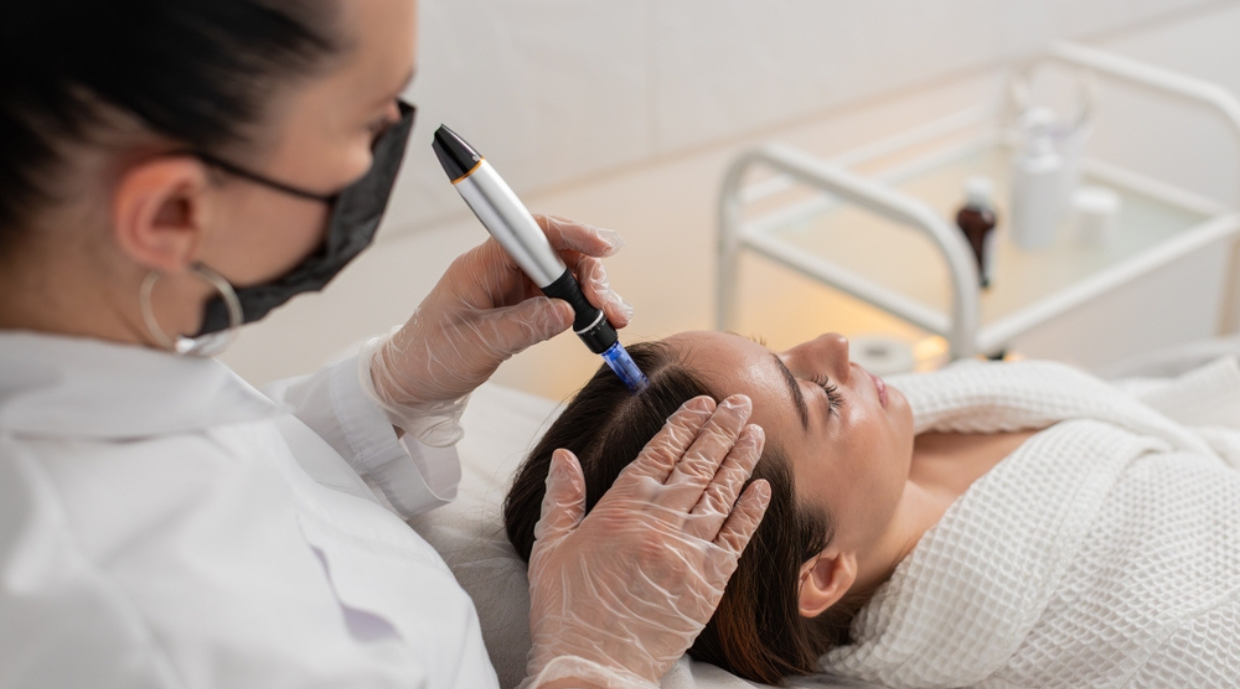
A fine cosmetic tattooing device is then used to deposit pigment into the skin.
Because the area being treated is very small, the procedure itself is usually relatively quick.
Immediately afterwards, the mark may look darker, larger or sharper than you expected. This does not necessarily represent the final result.
The pigment usually becomes softer as the skin heals.
4. What Does the Healing Process Look Like?
This is the stage where people can become worried because the beauty spot may change in appearance from day to day.
During the first few days, mild redness can occur around the treated area. The pigment may also appear darker than the shade you selected.
As healing continues, the area may become dry or develop slight flaking.
Do not scratch, peel or pick at the skin. Removing healing skin too early can pull pigment out and create an uneven result.
Over the following days, the mark normally begins to soften.
Semi-permanent beauty spot providers commonly describe the surface healing period as roughly one to two weeks, while the colour can continue settling for several more weeks.
Judge the final result only after the skin has properly healed.
5. How Long Does a Beauty Spot Treatment Last?
A cosmetic beauty spot should not automatically be considered permanent for life.
Semi-permanent beauty marks are commonly reported to last around one to three years, although there is no exact timeline for everyone.
The pigment gradually becomes lighter as time passes.
How quickly it fades can depend on:
- Skin type
- Pigment used
- Sun exposure
- Skincare products
- Treatment depth
- Natural skin renewal
- Aftercare
- Use of exfoliating products or retinoids
Permanent makeup placed closer to the surface of the skin may require periodic touch-ups to maintain its appearance. Penn Medicine also notes that permanent makeup pigment can fade and may require later reapplication.
If you like the mark after it has faded slightly, a touch-up can sometimes restore its definition.
6. What Should You Know Before Getting One?
A beauty spot is small, but it still involves breaking the skin and depositing pigment.
That means hygiene and technique matter.
Make sure sterile, single-use equipment is used and ask what type of pigment will be applied.
You should also avoid trying to cover or tattoo directly over an existing natural mole without proper medical assessment. Changes in a natural mole can sometimes need to be monitored, and covering it with pigment may make observation more difficult. Beauty-mark tattoo specialists also advise against tattooing directly over natural moles.
Tell your provider if you have active irritation, infection, eczema or another skin condition around the treatment area.
Cosmetic tattooing can also carry risks such as infection, allergic reactions, scarring or unwanted pigment changes, although these risks can be reduced through appropriate technique and aftercare.
Conclusion
A beauty spot treatment can create a small, distinctive feature without needing to apply makeup every day.
The procedure itself may be quick, but the best results depend on careful decisions before the pigment ever touches the skin.
Placement should complement your features, the pigment should match the look you want, and the mark needs time to settle during healing.
Most semi-permanent beauty spots gradually fade rather than staying unchanged forever, so future touch-ups may be needed.
Most importantly, choose a trained professional and do not use cosmetic pigment to disguise an existing mole without first making sure it is safe to do so.
Frequently Asked Questions
1. How long does a beauty spot treatment last?
A semi-permanent beauty spot may remain visible for around one to three years. The exact duration depends on skin type, pigment, sun exposure, skincare and how quickly your skin naturally renews.
2. Does beauty spot treatment hurt?
Most people experience only mild discomfort because the treated area is very small. A numbing product may be used before cosmetic pigmentation when needed.
3. Can I choose exactly where my beauty spot is placed?
Yes. Placement should normally be agreed before treatment. The provider can first draw a temporary mark so you can check its size and position before pigment is applied.
4. How long does a beauty spot take to heal?
Initial surface healing generally takes around one to two weeks. However, the pigment may continue settling and becoming softer for several weeks before you see the final appearance.
5. Can a beauty spot treatment be removed later?
Semi-permanent pigment normally fades with time, but it should not be considered instantly reversible. If you later want it removed, correction or tattoo-removal techniques may be required depending on the pigment used and how deeply it was placed.


