
Stretch marks can look very different from one person to another. Some are fresh and reddish, while others have been present for years and appear white or silver. A few may also be deeper and more noticeable than the surrounding skin.
These differences matter when choosing a stretch marks treatment.
Stretch marks are a type of scar caused when the skin stretches or shrinks quickly, affecting collagen and elastin. They commonly develop during pregnancy, puberty, rapid changes in weight or periods of fast muscle growth.
Treatment cannot guarantee that stretch marks will disappear completely. The goal is usually to make them less noticeable by improving their colour, texture and depth.
Understanding which stage your marks are in can make it easier to choose the right approach.
1. Why Does the Stage of a Stretch Mark Matter?
Stretch marks change as they mature.
New stretch marks often appear red, pink, purple, reddish-brown or dark brown depending on your skin tone. They may also feel slightly raised or itchy.
Over time, the colour fades. Older marks usually become white or silver and may feel slightly sunken when you run your fingers across them.
This change affects how the skin responds to treatment.
Recent stretch marks generally respond better to some treatments because they are still in an active stage. Mature marks are more established and may need treatments focused on collagen remodelling.
This is why the same procedure should not automatically be recommended to everyone.
2. New Red or Purple Stretch Marks: Treating Them Early
New stretch marks are usually easier to improve than marks that have been present for years.
At this stage, treatment may focus on reducing visible colour while supporting collagen repair.
Options that may be considered include:
- Microneedling
- Selected laser treatments
- Radiofrequency-based procedures
- Dermatologist-prescribed topical treatment
Some topical ingredients can also help early marks. Research reviewed by the American Academy of Dermatology suggests that tretinoin and hyaluronic acid may make early stretch marks less noticeable in selected patients.
Prescription retinoids are not suitable for everyone, particularly during pregnancy, so they should not be started without medical advice.
The main benefit of treating early is that the mark has not yet reached its mature white stage.
3. Old White or Silver Marks: Focus on Collagen
Older stretch marks usually require a different strategy.
Once a mark becomes white or silver, simply applying creams is unlikely to make a major difference.
Treatment often focuses more on stimulating collagen and improving the uneven texture.
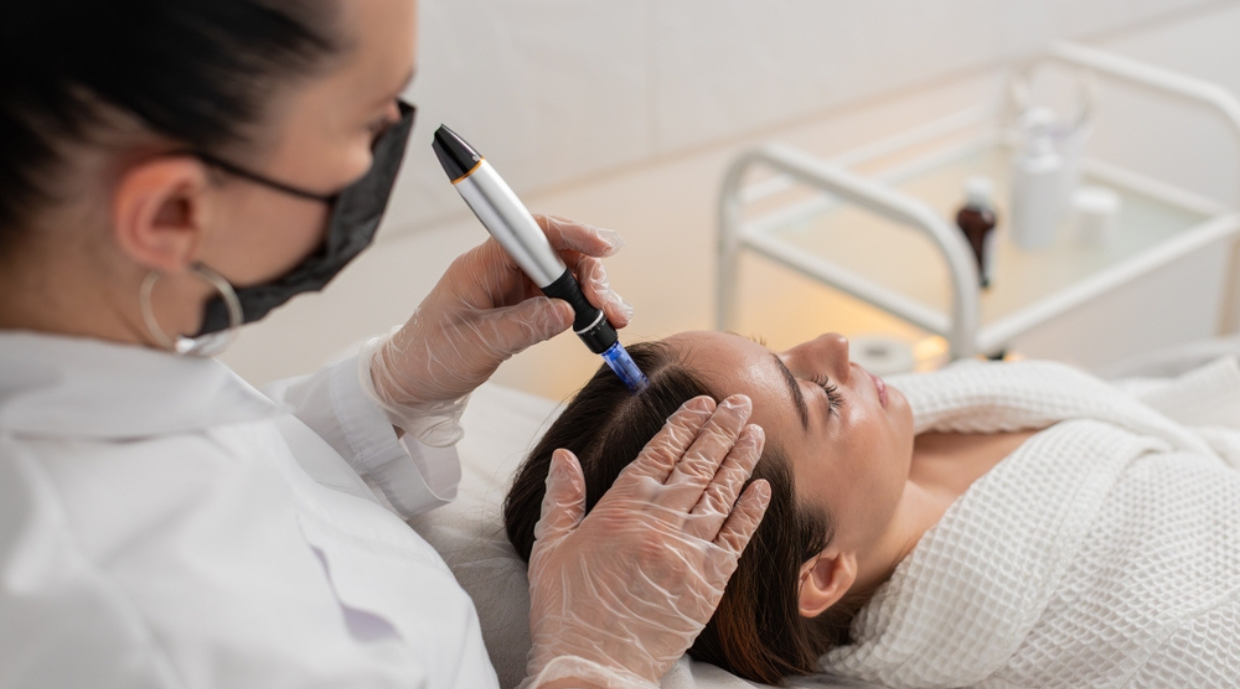
Microneedling creates controlled micro-injuries that encourage the skin’s natural repair process. Research has found that microneedling can improve stretch marks and may produce results comparable with some laser treatments.
Fractional laser treatment may also be considered to encourage resurfacing and collagen remodelling.
Radiofrequency microneedling is another option. It combines fine needles with radiofrequency energy delivered below the skin.
The right choice depends on your skin tone, depth of the marks and how much downtime you are comfortable with.
4. What About Deep or Stubborn Stretch Marks?
Some stretch marks remain noticeable even after they have faded.
They may be wider, deeper or spread across larger areas such as the abdomen, thighs, hips or buttocks.
In these cases, relying on one treatment may not always provide enough improvement.
A dermatologist may consider combining procedures such as microneedling, radiofrequency or laser treatment.
A recent systematic review found that no single procedure can be considered the best stretch marks treatment for every patient. Combination approaches may help improve results in selected cases.
Stubborn stretch marks also require patience.
Collagen does not rebuild immediately after a session. Changes develop gradually over several weeks or months.
5. How Is the Right Treatment Selected?
Choosing treatment involves more than looking at the colour of the mark.
A dermatologist should also consider:
Age of the marks: Newer and older marks behave differently.
Depth and width: Deep marks may require stronger collagen-stimulating procedures.
Skin tone: Some laser procedures carry a higher risk of temporary pigmentation in darker skin.
Body area: Stretch marks on the abdomen may respond differently from marks on the arms or thighs.
Previous treatment: Marks that have already undergone several procedures may need a different approach.
Research comparing fractional radiofrequency microneedling with fractional CO2 laser found improvement with both approaches, without clear evidence that one is always superior.
Anyone considering stretch marks treatment in Bangalore should therefore look for an individual assessment rather than choosing a procedure solely because it is popular.
6. What Results Can You Realistically Expect?
The aim of professional treatment is improvement, not complete erasure.
After a series of treatments, you may notice that the marks:
- Look less prominent
- Blend better with surrounding skin
- Feel smoother
- Appear less deep
- Have reduced colour contrast
Several sessions are often needed.
The number depends on the type of treatment, the stage of the stretch marks and how your skin responds.
It is also important to give the skin enough time between treatments. Procedures that stimulate collagen continue working after the appointment itself.
According to dermatology guidance, stretch marks are permanent scars, although professional procedures can make them significantly less noticeable.
Be cautious of any treatment promising guaranteed complete removal.
Conclusion
Choosing the right stretch marks treatment starts with understanding whether your marks are new, mature or particularly stubborn.
Fresh red or purple marks may respond more easily to early treatment. Older white or silver marks usually need procedures that focus more heavily on collagen remodelling, such as microneedling, radiofrequency or fractional laser.
Deep or resistant stretch marks may require several sessions or a combination of treatments.
If you are looking for stretch marks treatment in Bangalore, an assessment can help determine the stage of your marks and set realistic expectations about treatment, recovery and results.
The earlier you understand what type of stretch marks you have, the easier it becomes to choose a treatment based on your skin rather than trial and error.
Frequently Asked Questions
1. Which treatment is best for new stretch marks?
New red or purple stretch marks may respond to microneedling, selected laser treatments, radiofrequency and certain dermatologist-prescribed topical treatments. The best option depends on skin type and the severity of the marks.
2. Can old white stretch marks be treated?
Yes. Older white stretch marks can be improved with treatments such as microneedling, radiofrequency microneedling and fractional laser, although they may require more sessions than newer marks.
3. How many sessions are needed for stretch marks treatment?
There is no fixed number. Several sessions are commonly required, depending on the age, depth, size and treatment method.
4. Can stretch marks disappear completely?
No treatment can guarantee complete removal. Stretch marks are scars, but professional treatments can make their colour and texture less noticeable.
5. Is laser or microneedling better for stubborn stretch marks?
Both can be effective. Research has not shown one approach to be universally superior, so the decision should depend on skin tone, mark severity, downtime and professional assessment.


