
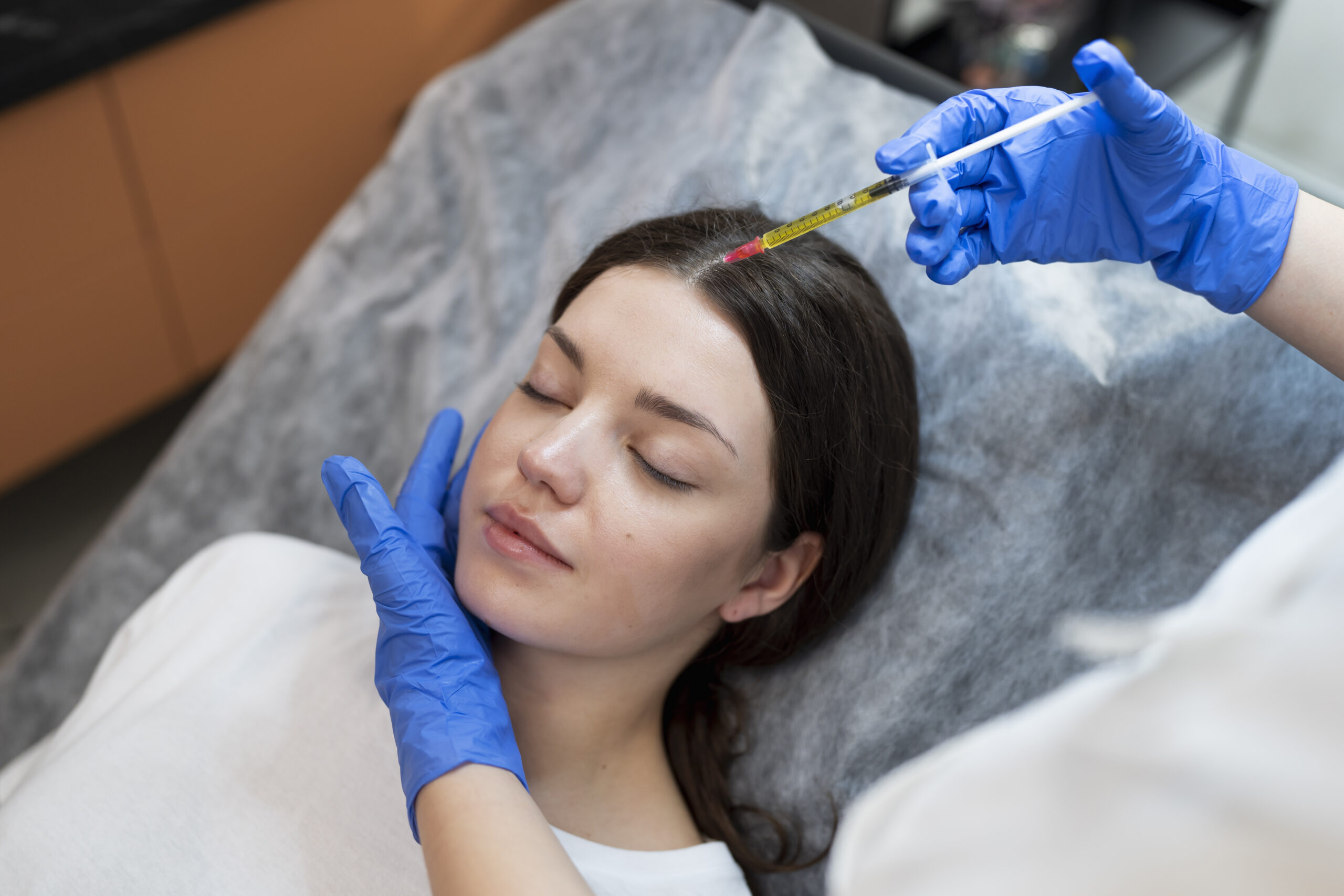
Hair thinning can be frustrating, especially when you have tried different shampoos, supplements and home remedies without noticeable improvement. PRP has become a popular option for people exploring non-surgical hair restoration, but its suitability depends on more than how much hair you are losing.
Choosing the best PRP treatment in Bangalore starts with understanding the cause of hair loss, what the procedure can achieve and whether the recommended treatment plan suits your condition.
Before committing to PRP, there are important questions worth asking about treatment sessions, expected results, safety and cost. This guide covers eight questions to help you make an informed decision.
What Should You Know Before Choosing PRP Hair Treatment?
Platelet-Rich Plasma (PRP) is a procedure that uses a concentrated portion of your own blood. Platelets contain growth factors involved in tissue repair, and PRP injections are used in selected cases to support hair follicle activity.
The procedure generally involves collecting a blood sample, processing it through a centrifuge and injecting the platelet-rich preparation into targeted areas of the scalp.
PRP may improve hair density in some people with pattern hair loss. However, it does not work equally well for everyone and should not be considered a permanent cure for baldness.
Here are the eight questions that matter most before beginning treatment.
1. Is PRP Suitable for My Type of Hair Loss?
Not all hair loss conditions respond to PRP.
Male and female pattern hair loss generally develop gradually. Men may notice a receding hairline or thinning crown, while women often experience widening of the central hair part.
PRP has been studied primarily for these forms of pattern hair loss, particularly when functioning follicles remain.
However, sudden shedding after illness, nutritional deficiencies, scalp infections and autoimmune conditions may require different treatments.
Ask your clinician:
- What type of hair loss do I have?
- Are my hair follicles still functioning?
- Would medical treatment be more appropriate?
- Are any scalp tests or blood investigations necessary?
For example, someone experiencing temporary shedding after a fever may not need an injectable procedure. Identifying the cause can help prevent unnecessary treatment.
Patients researching prp hair treatment in bangalore should understand why the stage and cause of thinning influence treatment suitability.
2. How Is PRP Prepared and Administered?
Although the basic procedure is similar across clinics, preparation methods can differ.
A small amount of blood is collected and processed to separate platelet-rich plasma. The resulting preparation is then injected into selected areas of the scalp.
Differences in centrifugation methods, platelet concentration and treatment protocols may influence the final preparation.
What should you check?
- Who prepares and administers the injections?
- What hygiene and infection-control procedures are followed?
- How is the scalp prepared before treatment?
- What discomfort should you expect during the session?
A clinic should explain its procedure clearly rather than relying solely on claims about advanced equipment.
The use of a particular preparation method does not automatically guarantee better hair regrowth.
3. How Many PRP Sessions Will I Need?
PRP is generally planned as a series of treatments rather than a single appointment.
Some protocols involve three or four initial sessions spaced several weeks apart. However, there is no universally established schedule suitable for every patient.
The number of appointments depends on the treatment approach, hair loss condition and individual response.
Before purchasing a package, clarify the recommended number of sessions and how the clinician plans to assess your progress.
Questions to ask include:
- How many initial appointments are recommended?
- What is the gap between sessions?
- When will my progress be reviewed?
- Will maintenance treatment be necessary?
The aim should be to establish a reasonable treatment plan rather than automatically committing to repeated sessions.
4. When Can I Expect Visible Results?
Hair growth occurs slowly, so PRP should not be expected to produce immediate changes.
Some patients may notice improvements in hair density after several months, while others experience limited or no measurable response.
Treatment effectiveness can depend on the degree of thinning, underlying diagnosis, existing follicle activity and whether additional treatments are being used.
A general timeline for assessing progress:
|
Treatment Stage |
What to Expect |
|
Initial sessions |
Treatment begins; visible changes may be minimal |
|
Around 2–3 months |
Early changes may become noticeable in some patients |
|
Around 3–6 months |
Hair density and treatment response can be reassessed |
| Longer-term follow-up | Maintenance or alternative treatment may be discussed |
These are general expectations rather than guaranteed outcomes.
Consistent scalp photographs taken under similar lighting can help monitor changes more reliably than casual observations.
It is also important to understand that PRP cannot reliably restore hair in areas where functioning follicles have been permanently lost.
5. Is PRP Better Than GFC Treatment?
PRP and Growth Factor Concentrate (GFC) are both blood-derived procedures offered for certain hair thinning concerns.
PRP uses platelet-rich plasma, while GFC involves a different processing method intended to obtain a growth-factor-rich preparation.
Although both are used for hair restoration, the available evidence does not establish that GFC consistently produces better results.
PRP and GFC at a glance
|
Factor |
PRP | GFC |
|
Treatment type |
Blood-derived injections | Blood-derived injections |
|
Preparation |
Platelet-rich plasma | Growth-factor concentrate |
|
Main purpose |
Support existing follicles in selected cases | Support existing follicles in selected cases |
|
Research evidence |
Larger body of clinical research | More limited comparative evidence |
| Treatment sessions | Depends on individual protocol |
Depends on individual protocol |
| Results | Variable |
Variable |
People exploring gfc hair treatment in Bangalore should discuss the differences in preparation, supporting evidence, expected benefits and total cost.
The gfc hair treatment cost in bangalore may differ from PRP depending on the clinic and session requirements.
A higher treatment price does not necessarily mean a better outcome. The decision should be based on clinical suitability.
6. How Much Does PRP Treatment Cost in Bangalore?
The cost of prp treatment in Bangalore depends on factors such as the clinic, treatment protocol, number of sessions and follow-up requirements.
KEZA’s published PRP service page advertises treatment starting from ₹6,000, although the actual cost depends on the recommended plan and current pricing.
Before booking, request a breakdown of the complete expense.
Check whether the quotation includes:
- Initial consultation and scalp examination.
- Individual PRP sessions.
- Follow-up assessments.
- Additional investigations or medications.
- Recommended maintenance appointments.
The price of prp treatment in Bangalore should be evaluated in relation to the complete treatment plan, not just a discounted single-session offer.
It is also worth asking whether additional sessions will be recommended only after assessing your response.
7. What Are the Possible Side Effects of PRP?
PRP uses a preparation derived from your own blood, which reduces certain risks associated with foreign substances. However, the procedure still involves blood collection and scalp injections.
Possible side effects include temporary discomfort, redness, swelling, bruising and tenderness.
Less common complications, such as infection, can occur.
A clinician should review your medical history before recommending the procedure.
Inform the clinic if you have:
- A blood or platelet disorder.
- An active scalp infection.
- A history of unusual bleeding.
- Significant medical conditions.
- Medications that affect bleeding or platelet function.
Do not stop prescribed medication without consulting the healthcare professional managing it.
You should also receive clear instructions about scalp care after the procedure and when to report unexpected symptoms.
8. What Happens If PRP Does Not Work for Me?
PRP does not produce the same results for every patient.
If hair density does not improve as expected, the next step should be reviewing the diagnosis and treatment response rather than automatically adding more sessions.
A clinician may reassess the hair loss pattern, investigate contributing conditions or consider established medical treatments.
In some cases, patients with advanced pattern baldness may explore surgical restoration.
For example, hair transplant treatment in bangalore involves moving healthy follicles from a donor area to regions affected by hair loss. This differs from PRP, which is intended to support existing follicles.
However, transplantation is not suitable for everyone. Donor hair availability, scalp health, medical history and future hair loss progression all influence surgical suitability.
The most useful treatment plan is one that can be adjusted according to your condition and response.
How to Choose the Right PRP Clinic in Bangalore
A professional consultation should explain whether PRP is suitable for you and what the treatment is expected to achieve.
Rather than comparing clinics only by price, consider these factors.
Qualified Medical Professionals
Check the qualifications and relevant experience of the clinician responsible for assessing your hair loss and administering treatment.
Proper Hair and Scalp Evaluation
An assessment should identify the likely cause of thinning before recommending PRP.
Clear Treatment Planning
The clinic should explain the suggested session schedule, expected outcomes and follow-up process.
Transparent Pricing
Ask for a complete estimate that includes recommended sessions and potential additional expenses.
Realistic Expectations
Avoid clinics promising guaranteed hair regrowth or permanent results for every patient.
PRP should be considered within an appropriate hair loss treatment in bangalore plan rather than as a solution for every form of hair fall.
Frequently Asked Questions
1. Is PRP effective for hair loss?
PRP may improve hair density in selected patients with male or female pattern hair loss. However, results vary, and it does not reliably treat every cause of hair loss.
2. Is PRP suitable for both men and women?
Yes. PRP may be considered for suitable men and women with certain types of hair thinning. A clinical assessment is necessary to determine whether the treatment is appropriate.
3. Is PRP hair treatment painful?
Patients may experience temporary discomfort during scalp injections. The level of pain differs between individuals, and the clinician may use appropriate measures to improve comfort.
4. Does PRP permanently stop hair fall?
No. PRP does not permanently cure progressive pattern hair loss. Benefits may require maintenance, and other treatments may be needed to manage the underlying condition.
5. Can PRP be combined with other treatments?
In selected cases, PRP may be used alongside established medical treatments. Combination therapy should be based on clinical suitability rather than assuming that more procedures will always provide better results.
Book a PRP Consultation at KEZA Skin & Hair Clinic
PRP may be an option for certain types of hair thinning, but the right decision begins with understanding your hair loss pattern, scalp health and treatment expectations.
Before choosing a package, make sure you understand the recommended number of sessions, possible side effects, expected timeline and complete treatment cost.
KEZA Skin & Hair Clinic in Indiranagar, Bangalore, offers consultations for hair and scalp concerns, including PRP and other hair restoration options.
Explore KEZA’s prp treatment in bangalore and schedule a consultation to discuss whether the procedure is appropriate for your individual condition.


