
Uneven skin tone, acne marks, melasma, tanning, and sun spots can make the complexion appear dull or patchy. While these concerns are often grouped under “skin whitening,” dermatologists usually focus on identifying and treating the excess pigmentation rather than changing a person’s natural skin colour.
The best skin whitening treatment in Bangalore is therefore not one cream, peel, or laser that works for everyone. Long-lasting improvement usually comes from a combination of accurate diagnosis, daily sun protection, suitable topical medication, and carefully selected clinical procedures.
Which Treatment Gives the Longest-Lasting Results?
For most pigmentation concerns, the most dependable approach includes:
- Daily broad-spectrum sunscreen
- Treatment of the underlying cause
- Dermatologist-prescribed pigmentation creams
- Chemical peels or laser treatment when appropriate
- A maintenance routine to reduce recurrence
Melasma, acne-related pigmentation, tanning, and sun spots do not respond to exactly the same treatment. A dermatologist must first identify the type, depth, and cause of the pigmentation.
The American Academy of Dermatology explains that there is no single best treatment for melasma. Effective care generally combines sun protection with topical medication and, in selected cases, an in-clinic procedure.
What Does Skin Lightening Treatment Actually Mean?
Skin lightening treatment should aim to reduce unwanted pigmentation and bring the skin closer to its natural, even tone.
It may be used for concerns such as:
- Melasma
- Acne marks
- Post-inflammatory hyperpigmentation
- Sun spots
- Uneven tanning
- Pigmentation caused by skin irritation
- Dark patches following an injury or skin condition
This is different from trying to change the natural colour of healthy skin across the entire face or body.
A professional skin lightening treatment in Bangalore should begin by asking why the pigmentation developed. Treating the visible dark patch without controlling its cause often leads to temporary improvement followed by recurrence.
Is Permanent Skin Lightening Possible?
The phrase permanent skin lightening can be misleading.
Your natural skin colour is influenced largely by genetics and melanin production. A treatment may reduce excess pigmentation, clear dark spots, or improve uneven tone, but it cannot safely and permanently stop the skin from producing melanin.
Melasma, for example, can return after treatment because it may be triggered by sunlight, visible light, hormonal changes, certain medicines, heat, or skin irritation. The AAD notes that melasma can last for years and may require continued sun protection and maintenance treatment.
In practical terms, long-lasting results mean:
- The pigmentation has been correctly diagnosed.
- The main trigger has been controlled.
- The treatment has reduced excess pigment.
- New pigmentation is being prevented.
- A maintenance routine is followed.
No ethical dermatologist should guarantee permanent whitening of a person’s natural skin tone.
Which Treatment Is Best for Different Pigmentation Concerns?
1. Topical Treatment for Mild or Moderate Pigmentation
Dermatologist-prescribed creams are often the first treatment considered for melasma, acne marks, and uneven pigmentation.
Depending on the diagnosis, treatment may include ingredients such as:
- Azelaic acid
- Kojic acid
- Vitamin C
- Retinoids
- Glycolic acid
- Prescription hydroquinone
- Combination pigmentation creams
Hydroquinone and prescription combination creams can be effective for selected patients, but they should not be used continuously without medical supervision. Incorrect or prolonged use may lead to irritation, rebound pigmentation, or a difficult-to-treat condition called ochronosis.
The AAD lists hydroquinone, tretinoin-based combinations, azelaic acid, kojic acid, and vitamin C among the treatments dermatologists may use for melasma.
2. Chemical Peels for Surface-Level Pigmentation
A chemical peel uses a controlled solution to exfoliate the upper layers of the skin. It may help improve:
- Superficial tanning
- Mild acne marks
- Uneven texture
- Surface pigmentation
- Dull-looking skin
Commonly used peel ingredients include glycolic acid, salicylic acid, lactic acid, and other dermatologist-selected formulations.
Chemical peels are usually more effective when combined with sunscreen and a suitable home-care routine. They are generally considered an additional treatment rather than a complete solution for stubborn melasma.
Peel strength must be selected carefully for Indian skin tones. An excessively strong peel can cause burns, irritation, or further pigmentation.
3. Laser and Light-Based Treatments
Laser treatment may be considered for selected pigmentation concerns, including:
- Resistant sun spots
- Certain types of acne pigmentation
- Freckles
- Deeper or stubborn pigment
- Melasma that has not responded adequately to first-line care
However, laser treatment is not automatically the best skin whitening treatment in Bangalore for every patient. In medium and deeper skin tones, aggressive energy settings can trigger post-inflammatory pigmentation.
Recent expert recommendations generally position lasers as a treatment for carefully selected patients, particularly when topical care and other conservative options have not provided sufficient improvement.
The dermatologist should assess the patient’s skin tone, pigmentation depth, medical history, previous treatments, and tendency to develop dark marks before recommending a laser.
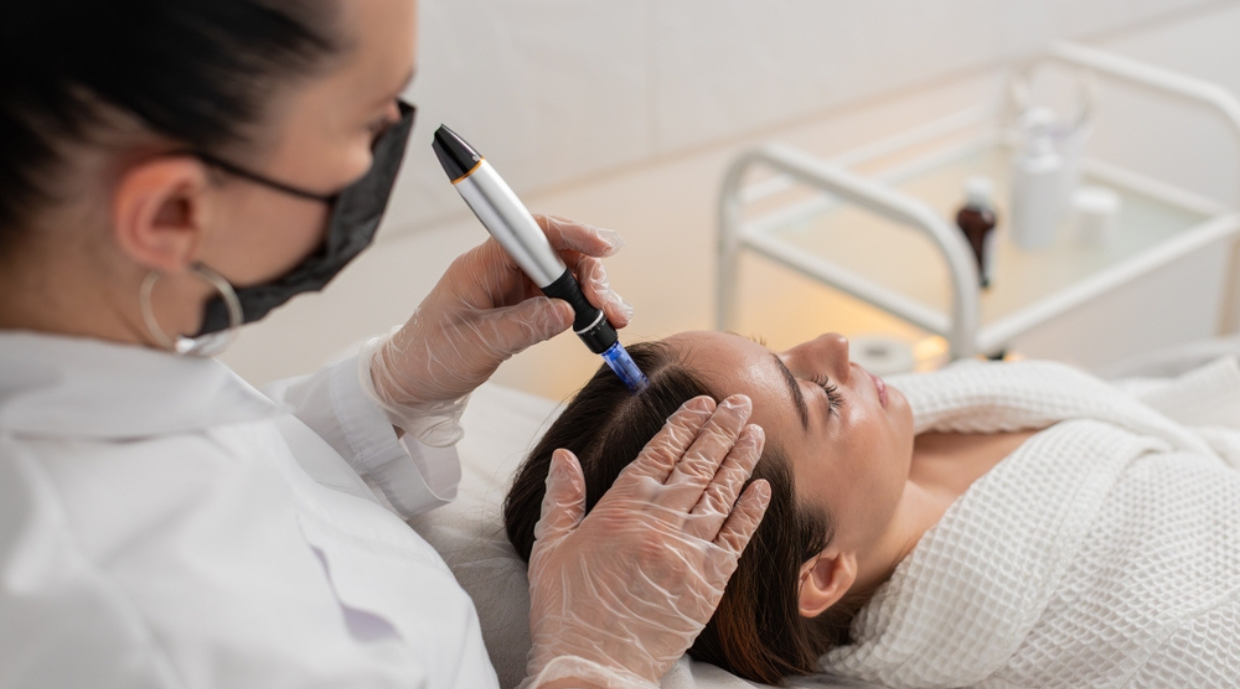
4. Microneedling for Selected Cases
Microneedling creates controlled microchannels in the skin. It may be used alongside topical treatments for certain cases of melasma, acne marks, and uneven texture.
It is not a whitening procedure on its own. Its role is usually to support skin renewal or improve the effectiveness of selected pigmentation treatments.
Poor technique, unsterile equipment, or treatment over active acne can cause irritation, infection, and further pigmentation. It should therefore be performed only by a trained medical professional.
5. Tranexamic Acid for Resistant Melasma
Tranexamic acid may be considered when melasma has not responded adequately to standard topical treatment.
It may be used in topical, procedural, or oral forms. Oral tranexamic acid is not suitable for everyone because it can be associated with blood-clotting risks. A dermatologist must review the patient’s medical history before prescribing it.
Patients should never purchase or take oral tranexamic acid solely for pigmentation without medical evaluation.
Why Sunscreen Determines How Long Results Last
No pigmentation treatment can provide stable results if the skin continues to receive uncontrolled ultraviolet and visible-light exposure.
Sunlight stimulates pigment production. It can darken existing marks and trigger new patches, particularly in people with melasma or post-inflammatory hyperpigmentation.
Dermatologists commonly recommend a broad-spectrum sunscreen with SPF 30 or higher. For melasma and dark spots, a tinted sunscreen containing iron oxide may provide additional protection against visible light.
A practical routine includes:
- Applying sunscreen every morning
- Using enough product to cover the face and neck
- Reapplying when outdoors for extended periods
- Wearing a hat or using shade during strong sunlight
- Avoiding unnecessary heat and irritation when they trigger pigmentation
Skipping sunscreen can undo the improvement achieved through creams, peels, or lasers.
How Long Does Skin Lightening Treatment Take?
The timeline depends on the type and depth of pigmentation.
Mild acne marks may gradually improve over a few months once the acne and inflammation are controlled. Deeper post-inflammatory pigmentation may take considerably longer.
For melasma, visible improvement may require several months of consistent treatment. The AAD states that patients following a melasma treatment plan may take approximately three to twelve months to see results.
Patients should be cautious of clinics or products promising:
- Whitening in one session
- Permanent fairness
- Instant melasma removal
- Guaranteed pigmentation clearance
- One cream for every skin type
Pigmentation develops gradually and usually needs gradual, controlled treatment.
What Should You Avoid?
Unlabelled Whitening Creams
Do not use products that do not clearly list their ingredients, manufacturer, or safety information.
Some unregulated lightening products have been found to contain mercury or undisclosed hydroquinone. Mercury-containing products can cause kidney, nervous-system, and skin damage.
Steroid Combination Creams Without a Prescription
Steroid-containing fairness creams may initially make the skin appear lighter. Continued misuse can lead to thinning, acne, redness, visible blood vessels, infections, and rebound pigmentation.
Bleach and Harsh Home Remedies
Lemon juice, baking soda, undiluted acids, and repeated facial bleaching can irritate the skin. Irritation itself can stimulate further pigmentation, especially in medium and deeper skin tones.
Glutathione Injections for Whitening
Intravenous glutathione should not be treated as a routine skin-whitening procedure. Evidence for its long-term effectiveness is limited, and medical reviews have raised concerns about its safety and lack of reliable clinical evidence for chronic use.
How Does a Dermatologist Select the Right Treatment?
Before recommending treatment, the dermatologist may assess:
- The location and pattern of pigmentation
- Whether the pigment is superficial or deep
- The patient’s natural skin tone
- Acne, eczema, or other inflammatory conditions
- Current skincare products
- Hormonal or pregnancy-related changes
- Previous procedures
- Medication history
- Sun and heat exposure
- The tendency to develop scars or dark marks
A Wood’s lamp, dermatoscope, or other examination method may sometimes be used to assess the depth and pattern of pigmentation.
This evaluation helps the doctor decide whether the patient needs a cream, peel, laser, combination treatment, or simply correction of an irritating skincare routine.
How to Choose a Skin Whitening Clinic
When comparing a full body whitening clinic, look beyond promotional before-and-after photographs.
A responsible clinic should:
- Have qualified dermatologists involved in diagnosis and treatment
- Explain the cause of your pigmentation
- Discuss realistic results rather than promising fairness
- Review your medical and skincare history
- Explain side effects and downtime
- Perform patch tests when appropriate
- Use procedures suitable for Indian skin tones
- Provide clear aftercare instructions
- Include a maintenance and sun-protection plan
- Avoid pressuring you into treatment packages
A reliable skin lightening treatment in Bangalore should be personalised. The same laser, peel, or cream should not be recommended to every patient.
Which Option Provides the Most Long-Lasting Improvement?
For most people, long-lasting improvement comes from a treatment plan rather than one procedure.
A typical plan may include:
- Diagnosing the pigmentation correctly
- Treating acne, eczema, irritation, or another underlying trigger
- Using a dermatologist-prescribed topical treatment
- Applying broad-spectrum sunscreen every day
- Adding chemical peels, microneedling, or laser treatment only when appropriate
- Continuing a maintenance routine after the pigmentation improves
A procedure may fade existing pigment, but maintenance prevents it from returning.


