
Two people may follow a similar GFC treatment schedule and still notice different results. One may first see reduced shedding, while another may notice gradual changes in hair thickness or density much later.
If you are considering GFC hair treatment in Bangalore, this variation is important to understand before treatment begins. Hair-loss cause, follicle condition, scalp health, treatment stage, medical factors, and individual response all influence the outcome.
Rather than comparing your progress with someone else’s before-and-after photographs, GFC results should be assessed against your own starting point.
Why Isn’t There One Standard GFC Result for Everyone?
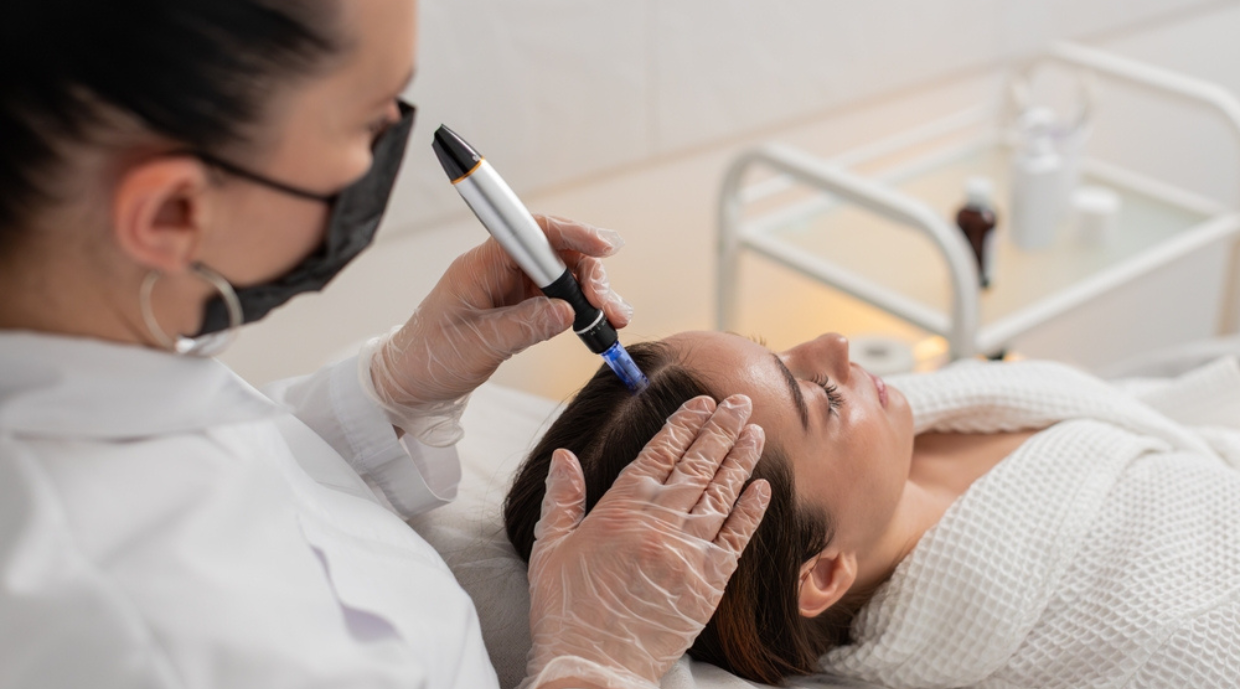
GFC stands for Growth Factor Concentrate. The treatment uses a preparation obtained from the patient’s own blood and introduces concentrated growth factors into selected areas of the scalp.
It is generally considered for certain forms of hair thinning where existing follicles are still present.
However, hair loss is not the same in every patient. Even people with similar-looking thinning may have different causes, different levels of follicular miniaturization, and different scalp conditions.
Research into concentrated growth-factor treatments has reported potential improvements in parameters such as hair density and thickness. At the same time, treatment protocols, preparation methods, number of sessions, and follow-up periods vary across studies.
This means one patient’s result cannot be used as a reliable prediction for another.
1. The Cause of Hair Loss Makes a Major Difference
The underlying diagnosis is one of the most important factors affecting GFC results.
Hair loss may be related to:
- Hereditary pattern hair loss
- Nutritional deficiencies
- Hormonal changes
- Thyroid-related conditions
- Significant stress
- Recent illness
- Certain medications
- Scalp disorders
- Temporary shedding
These conditions do not necessarily respond to the same treatment.
For example, someone experiencing androgenetic alopecia may have progressive follicular miniaturization, while another person may be shedding because of an underlying nutritional or medical issue.
In the second situation, addressing the underlying cause may be more important than simply increasing the number of GFC sessions.
Understanding the causes of hair loss and available treatments is therefore an important first step before choosing a procedure.
2. The Stage of Hair Thinning Affects the Response
Two people with the same broad diagnosis may still be at very different stages of hair loss.
Someone with early thinning may still have many active follicles that are producing finer strands. Another person may have long-standing areas where follicular activity has reduced substantially.
GFC works with existing follicles. It should not be expected to create completely new follicles in areas where permanent follicular loss has already occurred.
This is why early and advanced hair loss may respond differently.
A person with early miniaturization may have a different treatment potential from someone with extensive or long-standing bald areas.
People exploring hair loss treatment options should therefore have the pattern and stage of thinning assessed before deciding which approach may be suitable.
3. Follicle Health Is Different From Person to Person
Visible hair density does not tell the complete story.
Some follicles may still produce relatively strong strands but at a reduced thickness. Others may have progressed further and produce very fine, short hairs.
Areas with greater remaining follicular activity may have different potential for improvement from areas where miniaturization is more advanced.
This is one reason two people with similar-looking thinning can receive different treatment recommendations.
A scalp assessment may evaluate:
- Hair density
- Hair-shaft thickness
- Pattern of thinning
- Follicular miniaturization
- Areas of reduced activity
- Progression over time
The condition of the follicles matters more than simply counting how much visible hair remains.
4. Scalp Health May Influence GFC Treatment
The condition of the scalp also plays a role in treatment planning.
Active dandruff, inflammation, infection, excessive scaling, or another scalp condition may need attention before or alongside treatment for thinning hair.
Symptoms such as:
- Persistent itching
- Redness
- Pain
- Significant scaling
- Patchy hair loss
should not automatically be assumed to be part of pattern hair loss.
Treating the underlying scalp concern may sometimes be a more appropriate first step.
A hair-loss plan should therefore evaluate both the scalp and the follicles rather than focusing only on visible thinning.
5. Individual Biological Response Varies
People respond differently to medical and aesthetic procedures.
Factors such as genetics, age, tissue response, hair-growth cycle, general health, and individual biological variation can all influence how quickly changes become noticeable.
This does not mean that slower progress automatically indicates treatment failure.
Instead, results should be compared with the patient’s own baseline.
Someone may notice reduced shedding first. Another person may see gradual changes in thickness. A third patient may show only limited improvement and require the treatment plan to be reconsidered.
The timeline and degree of response are therefore naturally variable.
6. Treatment Schedule and Consistency Matter
GFC is usually assessed as a treatment course rather than after a single appointment.
The number of sessions and spacing between them may vary depending on the treatment plan and individual response.
Some protocols use several sessions separated by a few weeks, followed by reassessment. However, there is no single schedule suitable for everyone.
Patients considering GFC and PRP treatment should not copy a treatment schedule simply because it worked for someone else.
Follow-up appointments are also important. They allow the clinician to review whether shedding, density, scalp condition, or other factors have changed.
Missing follow-up visits may make it more difficult to evaluate whether the original plan is working as expected.
7. Other Health Factors Can Affect Hair Growth
Hair follicles are influenced by changes throughout the body.
Hair shedding may be affected by:
- Iron or nutritional deficiencies
- Hormonal changes
- Significant illness
- Rapid weight changes
- Stress
- Certain medications
- Other health conditions
These factors may exist alongside pattern hair loss.
For example, someone receiving GFC may also develop temporary shedding after an illness. In that situation, the treatment may be progressing as planned while a separate factor makes the overall hair loss appear worse.
Persistent or unusual shedding therefore deserves reassessment rather than automatically adding more GFC sessions.
8. GFC May Be Only One Part of the Treatment Plan
Hair-loss management does not always rely on one procedure.
Depending on the diagnosis, the overall plan may include:
- Scalp treatment
- Prescribed medication
- Nutritional correction
- Monitoring
- Lifestyle changes
- Another hair-loss procedure
For selected patients, PRP treatment for hair loss may also be considered.
This does not mean every patient needs multiple treatments.
The goal is to address the actual cause and stage of hair loss rather than combining procedures simply to try to produce faster results.
How Should GFC Results Be Measured?
Daily mirror checks are not a reliable way to evaluate progress.
Hair may look noticeably different depending on:
- Lighting
- Hair length
- Styling
- Scalp oiliness
- Hair washing
- Camera angle
- How the hair is parted
Standardized photographs taken under similar conditions are much more useful.
Follow-up assessments may also consider changes in:
- Shedding
- Hair density
- Hair-shaft thickness
- Scalp condition
- Pattern of thinning
- Overall progression
Hair grows gradually, so treatment should generally be assessed over months rather than days.
If meaningful improvement is not seen after an appropriate period, the diagnosis and treatment strategy may need to be reviewed instead of continuing additional sessions automatically.
Does Slower Progress Mean GFC Is Not Working?
Not necessarily.
Hair follows a natural growth cycle, and visible changes require time. Some people may first notice reduced shedding while changes in density take longer.
However, slow progress should still be reviewed.
If the expected response is not occurring, the clinician may reconsider:
- The original diagnosis
- Stage of follicular loss
- Scalp condition
- Treatment schedule
- Medical or nutritional contributors
- Whether another approach is more appropriate
More treatment does not automatically mean better treatment.
Conclusion
GFC hair treatment results vary because hair loss itself varies considerably between individuals.
The underlying diagnosis, stage of thinning, follicle activity, scalp condition, general health, treatment schedule, and individual biological response can all influence how quickly and how much improvement becomes noticeable. These are also the central factors identified throughout the original draft. Pasted markdown
If you are considering GFC hair treatment in Bangalore, focus on your own diagnosis and baseline rather than comparing your progress with another patient.
A professional hair and scalp assessment can help establish whether GFC is appropriate, what results may realistically be expected, and how progress should be monitored over time.
Frequently Asked Questions
1. Why did someone else see GFC results faster than me?
Hair-loss cause, follicle condition, stage of thinning, scalp health, and individual response vary. Another person’s timeline should not be used to predict your own results.
2. Does slower improvement mean GFC is not working?
Not necessarily. Hair grows gradually, and meaningful changes may take several months to assess. Progress should be reviewed after an appropriate treatment period.
3. Does the stage of hair loss affect GFC results?
Yes. Areas with active but miniaturized follicles may have different treatment potential from areas with advanced or long-standing follicular loss.
4. Can scalp problems affect GFC treatment results?
Yes. Active inflammation, infection, significant dandruff, or another scalp condition may influence the treatment plan and may need separate management.
5. Should I take additional GFC sessions if results are slow?
Not automatically. More sessions do not guarantee faster or better results. The cause of hair loss, follicle condition, treatment response, and overall plan should first be reassessed.


