
Pimple scars do not all have the same structure. Some appear as narrow, deep pits, while others create broader depressions, rolling texture, or raised areas above the surrounding skin.
Because these scars develop differently, one treatment does not necessarily work equally well for all of them.
If you are researching pimple scar removal in Bangalore, treatment planning usually begins by identifying the scar type, depth, skin tone, active acne, and whether pigmentation is also present. Many people have more than one type of acne scar, which means a staged or combination approach may sometimes be considered.
Why Does the Type of Pimple Scar Matter?
Acne scars form when inflammation affects deeper layers of the skin and alters the normal healing process.
When too little supporting tissue remains, depressed scars may form. When excessive scar tissue develops, the result may be a raised scar.
The main depressed acne-scar patterns are:
- Ice pick scars
- Boxcar scars
- Rolling scars
Raised hypertrophic or keloid scars form another category and behave differently.
This classification matters because a treatment that may help a shallow rolling scar may not be suitable for a very deep ice pick scar.
A professional acne scar treatment assessment should therefore evaluate the individual scar pattern before a treatment method is selected.
How Are Ice Pick Scars Treated?
Ice pick scars are usually narrow at the skin surface but extend relatively deeply.
They often resemble small punctures or enlarged pores, although their depth may be greater than their visible opening suggests.
Because of this structure, ice pick scars often need a targeted approach rather than treatment directed only at the overall surface of the skin.
One method used in dermatology for selected ice pick scars is targeted chemical reconstruction, where a carefully controlled chemical agent is placed directly within the scar to encourage remodeling.
This type of technique is different from a full-face peel because the individual scar is treated more precisely.
Other treatment approaches may also be considered depending on the number, depth, location, and surrounding skin.
The goal is generally to reduce the visible depth and shadowing of the scar rather than promise complete disappearance.
How Are Boxcar Scars Treated?
Boxcar scars are wider depressions with more defined edges.
Some are shallow, while others extend more deeply into the skin. This difference in depth can significantly affect treatment planning.
Shallower boxcar scars may sometimes be considered for treatments designed to improve texture and stimulate collagen remodeling.
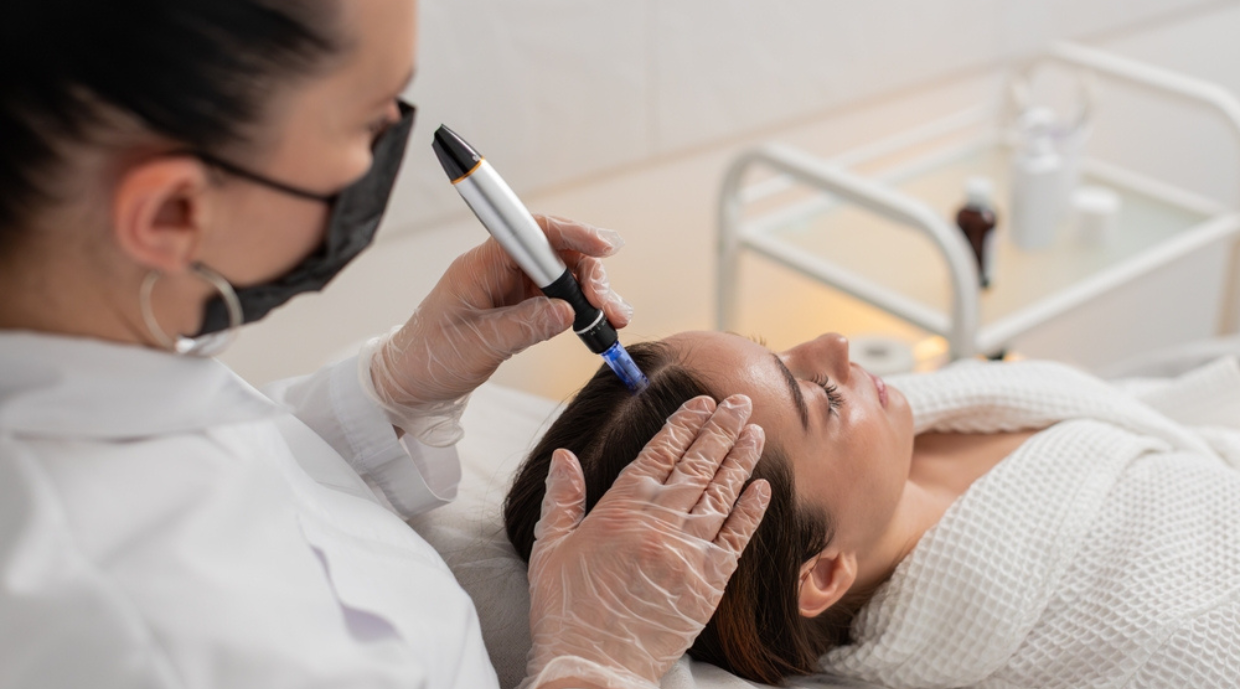
Depending on the scar characteristics, approaches may include procedures such as microneedling, resurfacing techniques, or selected chemical treatments.
For superficial texture or pigmentation concerns that occur alongside scars, chemical peel treatment may also form part of a wider skin plan where appropriate.
Deeper boxcar scars may need a different or more targeted strategy.
This is why two people who both say they have “boxcar scars” may not receive the same treatment recommendation.
How Are Rolling Acne Scars Treated?
Rolling scars tend to be broader and have smoother, sloping edges.
Instead of looking like isolated pits, they often create a wave-like or uneven appearance across a larger area of skin.
Some rolling scars may be influenced by fibrous tissue beneath the skin that pulls the surface downward.
When this deeper attachment is present, treatment may need to address the underlying tethering rather than focusing only on the skin surface.
One general dermatologic approach used for selected tethered scars is subcision. This involves releasing fibrous attachments beneath the scar so the surface has an opportunity to lift and remodel.
Additional texture-focused treatments may sometimes be considered afterward.
The important point is that rolling scars may involve both the visible surface and deeper structural changes.
How Are Raised Acne Scars Treated?
Not all acne scars are depressed.
Some people develop raised hypertrophic scars or keloids. These form when excess scar tissue develops during healing.
Raised scars should not be treated in the same way as ice pick, boxcar, or rolling scars.
Treatment may focus on flattening, softening, or reducing the raised tissue.
The approach depends on factors such as scar thickness, location, symptoms, skin type, and whether the person has a tendency to develop keloids.
People with more complex raised or structural scars may need a broader scar revision assessment before deciding on treatment.
What If You Have More Than One Type of Pimple Scar?
Mixed acne scarring is common.
A person may have several deep ice pick scars, a few boxcar depressions, and broader rolling scars within the same area.
Pigmentation may also be present around some of those scars.
Using one treatment across the entire face may therefore produce uneven results.
A treatment plan may first focus on deeper or tethered scars before addressing broader texture.
Another patient may have mostly shallow scars and require a different sequence.
Treatment order depends on:
- Scar type
- Scar depth
- Number of scars
- Skin tone
- Pigmentation
- Active acne
- Previous procedures
- Healing response
The aim is to match each treatment to the structural problem rather than using one procedure for every scar.
Are Dark Pimple Marks Treated the Same Way as Scars?
No.
A flat dark mark left after a pimple may be post-inflammatory pigmentation rather than a true structural scar.
If the skin remains flat but appears darker, pigmentation may be the main concern.
If there is a pit, depression, uneven contour, rolling texture, or raised area, structural scarring is more likely.
Some people have both.
For example, a boxcar scar may also contain darker pigmentation. In that situation, treatment may need to address both colour and texture.
A treatment focused only on pigmentation will not necessarily correct a deep depression.
Likewise, a scar-focused procedure may not completely remove surrounding pigmentation.
Should Active Acne Be Treated Before Pimple Scars?
In many cases, controlling ongoing acne is an important part of the treatment plan.
If new inflammatory pimples continue to develop while old scars are being treated, additional scars may form.
This can reduce the overall improvement in skin appearance.
Treatment planning may therefore begin with controlling active breakouts before focusing heavily on established scars.
In some situations, acne management and scar treatment may overlap.
The aim is not only to improve existing scars but also to reduce the risk of creating new ones.
Does Skin Tone Affect Scar Treatment?
Yes. Skin tone and pigmentation tendency may influence treatment planning.
Some people are more likely to develop post-inflammatory pigmentation after inflammation or skin procedures.
This does not automatically prevent scar treatment, but treatment intensity, spacing, preparation, and aftercare may need to be adjusted.
Pigmentation should also be assessed separately from structural scarring.
A scar may become shallower while a dark mark remains visible.
Similarly, pigmentation may improve while the underlying depression is unchanged.
This distinction is particularly important when selecting treatment for people who develop dark marks easily after acne or skin irritation.
What Factors Affect Which Treatment Is Chosen?
Scar type is important, but it is not the only factor.
Treatment planning may also consider the depth and number of scars, areas affected, skin tone, active acne, pigmentation tendency, previous scar treatments, history of raised scarring, skin sensitivity, recovery time, and treatment goals.
Someone with three deep ice pick scars may need a very different approach from someone with widespread shallow rolling scars.
The broader scar removal treatment discussion should therefore begin with assessment rather than selecting a treatment based on popularity.
How Many Sessions May Be Needed?
There is no standard number of sessions for every type of pimple scar.
Some superficial concerns may be treated through a planned series of sessions. Deeper or mixed scars may need several treatment stages using different approaches.
Skin healing and collagen remodeling also take time.
Repeating procedures too frequently does not automatically produce faster improvement.
Progress should be reviewed after an appropriate healing period.
Consistent photographs taken under similar lighting and angles may help show whether scars are becoming shallower or less noticeable.
The treatment plan can then be continued or adjusted based on how the skin responds.
Can Pimple Scars Be Completely Removed?
Complete scar removal should not be promised.
Established acne scars involve structural changes in the skin, so treatment usually focuses on improving their appearance rather than making them disappear completely.
Goals may include reducing scar depth, softening visible edges, improving overall texture, reducing shadowing, and making scars less noticeable.
Results vary according to scar type, severity, skin characteristics, treatment method, healing response, and number of sessions.
A realistic treatment plan should therefore focus on meaningful improvement rather than completely scar-free skin.
Why Does Treatment Sequence Matter?
The order in which scars are treated may influence the overall result.
For example, addressing broad surface texture first may not fully improve a deep tethered scar.
Likewise, treating pigmentation alone will not correct underlying structural depressions.
A staged approach may therefore begin with the deeper or more structurally complex scars before moving to broader texture and colour concerns.
The sequence should be individualized rather than following the same routine for every patient.
Conclusion
Different types of pimple scars may require different treatment strategies.
Ice pick scars are narrow and deep, boxcar scars have more defined depressions, rolling scars may involve underlying tethering, and raised scars involve excess scar tissue.
Many people have several scar types at the same time. The original draft correctly emphasizes that this is one of the main reasons combination or staged treatment may sometimes be more appropriate than applying one procedure to every scar. Pasted markdown
If you are considering pimple scar removal in Bangalore, begin with a detailed scar assessment. Identifying the scar type, depth, pigmentation, active acne, skin characteristics, and previous treatment history helps determine which approach may be appropriate and what level of improvement is realistic.
Frequently Asked Questions
1. Which treatment is best for ice pick acne scars?
There is no single treatment suitable for every ice pick scar. Because these scars are narrow and deep, targeted approaches may be considered depending on their depth, number, location, and skin characteristics.
2. Are rolling scars treated differently from boxcar scars?
Yes. Rolling scars may involve fibrous tethering beneath the skin, while boxcar scars have more defined depressions. Their structures may therefore require different treatment approaches.
3. Can one treatment improve every type of acne scar?
Not always. Mixed acne scarring is common, and different scar types may respond differently. A staged or combination plan may therefore be considered.
4. Are chemical peels suitable for deep pimple scars?
Chemical peels may help selected superficial texture or pigmentation concerns, but deeper structural scars may require another approach. Suitability depends on scar depth and skin characteristics.
5. How long does pimple scar treatment take?
There is no fixed timeline. It depends on scar type, depth, treatment method, healing response, treatment intervals, and the number of sessions required.


