
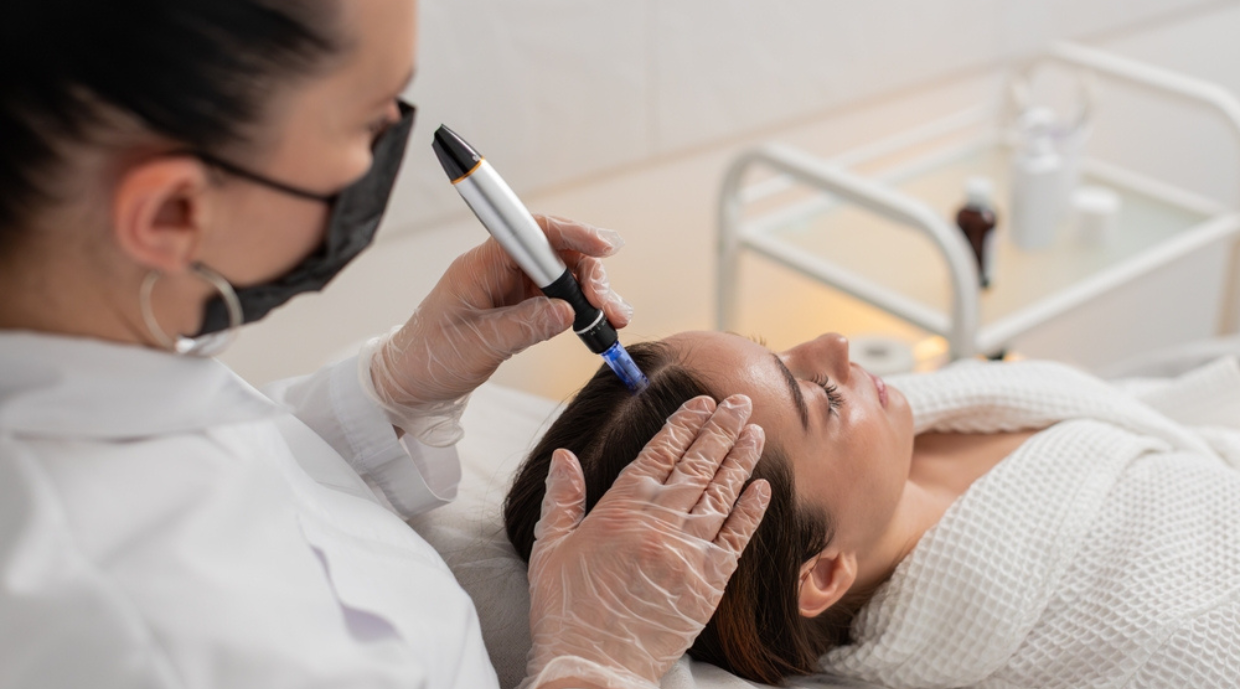
Acne scar treatment is rarely a one-session process. Some people may need only a limited treatment course, while others with deeper or mixed scars may require several sessions or different procedures performed in stages.
If you are researching pimple scar removal in Bangalore, it is more useful to think about a treatment plan than a fixed session number. Scar type, depth, skin tone, active acne, treatment method, healing response, and previous procedures can all affect how many appointments may be appropriate.
Someone with a few shallow scars may therefore follow a very different treatment schedule from someone with a combination of ice pick, boxcar, and rolling scars.
Why Is There No Fixed Number of Acne Scar Treatment Sessions?
Acne scars are not structurally identical.
Ice pick scars tend to be narrow and deep. Boxcar scars may be shallow or deep with more defined edges. Rolling scars create broader depressions and may sometimes be influenced by fibrous attachments underneath the skin.
Raised scars behave differently again.
Because the underlying problem varies, treatment should begin with scar classification rather than promising a predetermined number of sessions.
A professional acne scar treatment assessment can help identify the scar pattern and determine which treatment approach may be suitable.
The number of sessions should then be adjusted according to how the skin responds.
How Does Scar Type Affect the Number of Sessions?
Scar type is one of the most important factors in determining the treatment plan.
Ice pick scars are often deeper than their small surface opening suggests. They may require targeted treatment rather than relying only on broad resurfacing.
Boxcar scars vary considerably in depth. A shallow boxcar scar may respond differently from a deep one, even though both belong to the same category.
Rolling scars are wider and may involve deeper attachments that pull the skin downward. Treatment may need to address this structural component before broader texture is treated.
Raised scars need a different approach altogether because they involve excess scar tissue rather than a depression.
This means two patients with “acne scars” may require completely different numbers and types of treatment sessions.
Does the Treatment Method Affect Session Count?
Yes. Different procedures work in different ways and therefore follow different schedules.
Microneedling
Microneedling creates controlled microscopic injuries in the skin to encourage collagen remodeling.
It is often performed as a series because the skin needs time to heal and remodel between appointments. The number of sessions depends on the depth and extent of the scars as well as the response after each treatment.
Shallow textural concerns may follow a different course from deeper structural scarring.
Chemical Peels
Chemical peels also vary considerably in strength.
Superficial peels may be performed as a series, while deeper chemical procedures follow different recovery schedules.
They may have a role in selected superficial textural concerns or pigmentation, but they are not automatically appropriate for every deep acne scar.
A chemical peel treatment should therefore be selected according to the skin concern rather than used simply because several sessions are available.
Resurfacing Procedures
Resurfacing treatments are generally selected according to scar depth, skin characteristics, treatment intensity, and expected recovery time.
Some may be performed as a series, while others involve fewer treatment sessions with longer recovery periods.
The number alone does not indicate how effective a treatment will be.
Targeted Structural Treatments
Certain depressed scars may require treatment directed at the individual scar or at structures below the skin.
For example, tethered rolling scars may sometimes need an approach that addresses deeper attachments before surface texture is treated.
This can turn treatment into a staged process rather than a simple repeated series of the same procedure.
Do Deeper Acne Scars Always Need More Sessions?
Not necessarily, but deeper scars often require a more complex strategy.
A shallow scar may respond to a straightforward treatment series. A deep ice pick scar, sharply edged boxcar scar, or tethered rolling scar may need a more targeted approach.
The scar may also require more than one type of treatment.
This means a deeper scar does not always need the same procedure repeated many times. In some cases, changing the treatment strategy may be more useful than simply adding sessions.
For significant structural concerns, a scar revision assessment may help determine whether a different approach is appropriate.
Why Might Mixed Acne Scars Take Longer?
Mixed acne scarring is common.
The same area may contain deep ice pick scars, shallow and deep boxcar scars, rolling depressions, and post-acne pigmentation.
One procedure may not improve all of these equally.
A staged plan may first address the deeper or tethered scars. Broader texture or pigmentation may then be treated later.
This is one reason comparing your treatment schedule with another person’s can be misleading.
A patient with predominantly shallow rolling scars may complete treatment sooner than someone with several different scar types requiring different approaches.
Does Skin Tone Affect Treatment Spacing?
Skin tone and pigmentation tendency may influence both treatment selection and the interval between sessions.
Many scar treatments deliberately create controlled inflammation to stimulate healing or collagen remodeling. In people who develop post-inflammatory pigmentation easily, the skin may need additional time to recover.
Treatment intensity may also need to be adjusted.
A scar may improve structurally while temporary pigmentation makes the area look darker during healing.
This is why the surrounding skin should be assessed as carefully as the scar itself.
People considering broader scar removal treatment should have pigmentation risk, skin sensitivity, and previous reactions reviewed before a treatment schedule is finalized.
Should Active Acne Be Controlled Before Scar Treatment?
Active acne is an important consideration.
If new inflammatory pimples continue to develop while older scars are being treated, additional scars or pigmentation may form.
This can make the overall skin appear unchanged even when some existing scars have improved.
In many cases, controlling ongoing breakouts is therefore an important part of scar management.
Treatment for active acne and scars may sometimes overlap, but the sequence should be decided according to the condition of the skin.
Preventing new scars is just as important as treating existing ones.
How Long Should You Wait Between Acne Scar Sessions?
The interval depends on the procedure and how the skin heals.
Many acne-scar treatments work by creating a controlled healing response. Collagen remodeling and skin recovery continue after the visible redness or swelling has settled.
Repeating treatment too soon does not automatically speed up improvement.
Adequate time between sessions helps the clinician evaluate how much change has occurred and whether the original treatment plan still makes sense.
More frequent treatment is therefore not necessarily better treatment.
How Do You Know Whether Another Session Is Needed?
Progress should be assessed after the skin has had enough time to recover.
Daily mirror checks are unreliable because acne scars can appear deeper or shallower depending on lighting, facial angle, skin hydration, and shadows.
More consistent assessment may consider:
- Scar depth and edges
- Overall skin texture
- Pigmentation
- Shadowing
- Active acne
- Response to the previous session
- Standardized photographs taken under similar conditions
If improvement is progressing as expected, another session may be appropriate.
If the response is limited, repeating the same procedure automatically may not be the best option. The scar type, treatment method, or overall plan may need to be reconsidered.
Can More Sessions Completely Remove Acne Scars?
No number of sessions should be guaranteed to completely remove established acne scars.
Structural scars represent changes within the skin, so treatment generally aims to make them less noticeable rather than return the skin to a completely scar-free state.
The goals may include reducing scar depth, softening visible edges, improving uneven texture, reducing shadowing, and making scars less noticeable in normal lighting.
The amount of improvement depends on scar type, depth, treatment method, skin characteristics, and individual healing response.
More sessions do not automatically mean better results.
Is There a Point When Treatment Should Stop?
Yes.
Acne scar treatment does not need to continue indefinitely.
Once meaningful improvement has been achieved, the remaining scars should be reassessed against the patient’s treatment goals.
Continuing procedures simply because some scars are still visible may not always provide enough additional benefit to justify more treatment or downtime.
The decision should consider how much improvement has already occurred, what scars remain, what additional improvement is realistically possible, and how the skin has tolerated previous sessions.
Treatment should therefore remain goal-based rather than session-based.
Conclusion
There is no single number of sessions suitable for every acne scar treatment plan.
Some people may need only a few appointments, while deeper, tethered, or mixed scars may require multiple stages or a combination of treatments. Scar type, depth, treatment method, skin tone, pigmentation tendency, active acne, and healing response all influence the schedule.
The supplied draft also correctly emphasizes that the final number of sessions should be reviewed throughout treatment rather than decided permanently before the first procedure. Pasted markdown
If you are considering pimple scar removal in Bangalore, begin with a detailed scar assessment. Identifying whether you have ice pick, boxcar, rolling, raised, or mixed scars can help determine which treatment is appropriate, how sessions should be spaced, and what level of improvement is realistic.
Frequently Asked Questions
1. Are three sessions enough for acne scars?
Three sessions may be enough for some treatment plans, but not for everyone. The number depends on scar type, depth, procedure, and skin response.
2. How many microneedling sessions may be needed for acne scars?
Microneedling is often performed as a treatment series. The exact number depends on the severity and type of scars, treatment intensity, and how the skin responds between sessions.
3. Do deep acne scars need more sessions?
They may require a more complex or staged plan, but simply adding more sessions is not always the answer. Deep scars may need a different treatment approach.
4. How long should I wait between acne scar treatments?
The interval depends on the procedure and healing response. The skin should have adequate time to recover before treatments designed to stimulate remodeling are repeated.
5. Can I stop treatment once my acne scars improve?
Yes. Treatment does not need to continue indefinitely. Further sessions should depend on the remaining scars, skin response, realistic goals, and whether additional improvement is likely.


