
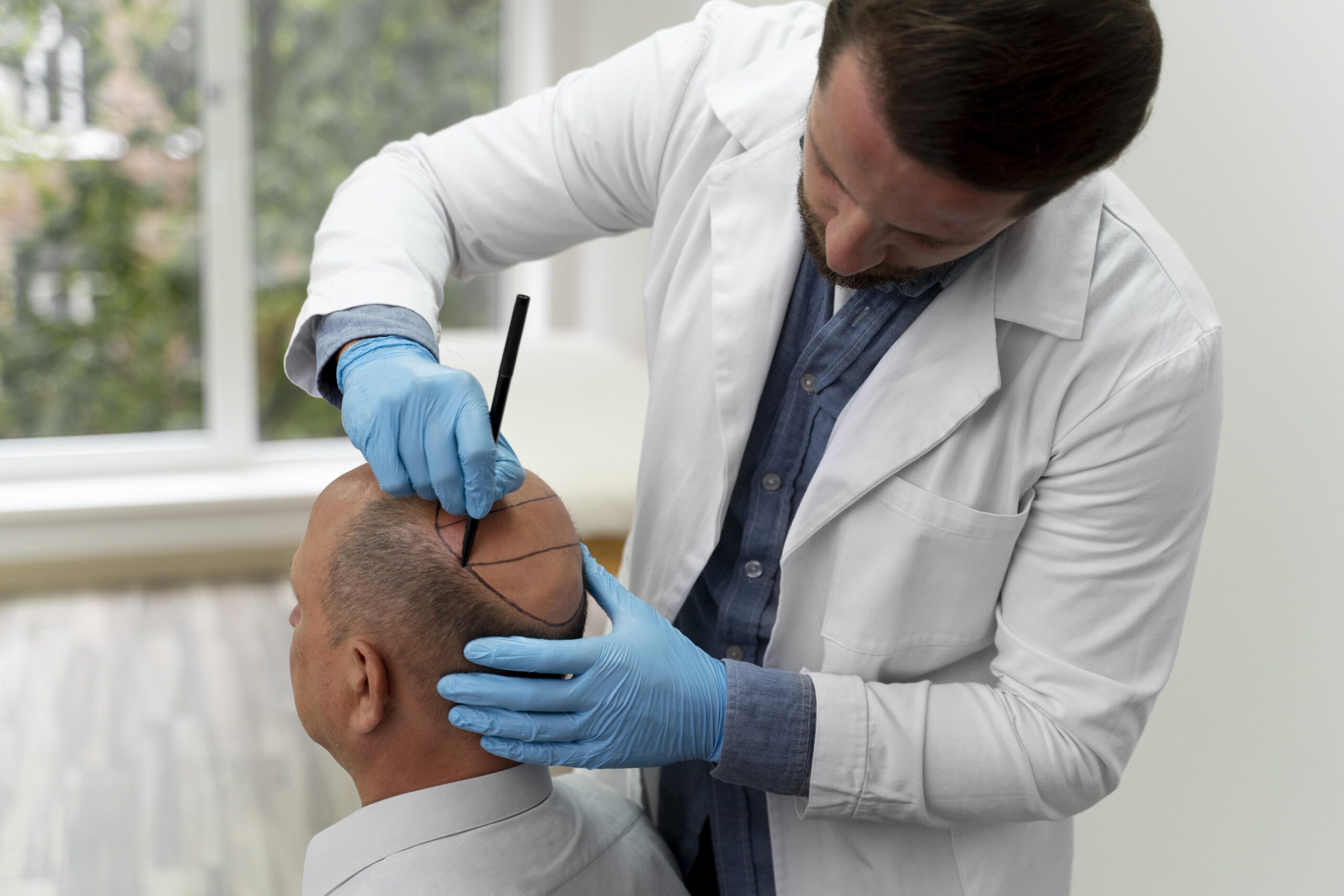
A hair transplant can restore coverage in thinning or bald areas, but a natural-looking result requires more than placing healthy follicles into the scalp. Poor hairline planning, unrealistic expectations and inadequate donor hair assessment can affect how the final result looks, even months after surgery.
Many people focus on the number of grafts or the advertised price without understanding what makes a transplant suitable for their condition.
If you are considering hair transplant treatment in bangalore, knowing the common mistakes beforehand can help you ask better questions and make informed decisions. Here are nine important mistakes to avoid, from choosing a clinic to planning long-term hair restoration.
9 Hair Transplant Mistakes That Can Affect Your Results
1. Getting a Hair Transplant Without Understanding Your Hair Loss
Not every type of hair loss requires a transplant. Genetic pattern baldness, temporary shedding, autoimmune conditions and inflammatory scalp disorders can have different causes and treatment requirements.
For example, someone experiencing temporary hair shedding after an illness may not need surgery. Similarly, active scalp inflammation or certain forms of alopecia may require medical management before transplantation can even be considered.
What to check before surgery:
- The underlying cause of hair loss.
- Whether the condition is progressing.
- The health of the scalp and existing follicles.
- Whether non-surgical treatment may be appropriate.
A proper diagnosis can help prevent unnecessary surgery and identify conditions that need a different approach.
Exploring hair loss treatment in bangalore before deciding on transplantation can help you understand the available options.
2. Choosing a Clinic Based Only on Hair Transplant Cost
Cost is an important consideration, but the cheapest advertised package is not always the most suitable treatment.
Hair transplant pricing depends on several factors, including the technique used, graft requirements, medical expertise and complexity of the procedure.
Two clinics may offer different prices because their treatment plans involve different graft counts, surgical approaches or follow-up services.
Before comparing prices, ask:
- What is the estimated number of grafts?
- Who will perform the surgery?
- Are consultation and follow-up charges included?
- What happens if complications arise?
- Are medications and aftercare included in the package?
A higher price does not automatically guarantee better results. The focus should be on appropriate qualifications, safety standards, transparent pricing and realistic treatment planning.
3. Ignoring the Quality and Availability of Donor Hair
A hair transplant does not create new follicles. It moves existing follicles from an appropriate donor area, usually the back or sides of the scalp.
This means the number and quality of available donor follicles are important limitations.
For example, a patient with extensive baldness and limited donor density may not achieve the same coverage as someone with a smaller area of hair loss.
Removing too many follicles can also leave the donor region visibly thin or scarred.
A donor assessment should consider hair density, strand thickness, scalp characteristics and the likelihood of future hair loss.
The aim should be balanced coverage, not simply harvesting the largest possible number of grafts.
4. Expecting an Unnaturally Low or Perfectly Straight Hairline
A natural hairline should suit the person’s facial features, age and existing hair growth pattern.
Some patients request a very low or perfectly straight hairline because they want to recreate their teenage appearance. However, this may look unnatural as they age or if surrounding hair continues to thin.
Hairline planning should consider:
- Facial proportions and forehead shape.
- Age and long-term hair loss progression.
- Natural hair growth direction.
- Available donor follicles.
- Gradual transitions in hair density.
The angle and placement of individual follicular units also influence how the transplanted hair blends with existing hair.
Before surgery, discuss the proposed hairline design and ask why it is appropriate for your face and future hair loss pattern.
5. Assuming PRP or GFC Will Deliver the Same Results as a Transplant
Hair transplantation, Platelet-Rich Plasma (PRP) and Growth Factor Concentrate (GFC) treatments serve different purposes.
A hair transplant redistributes existing follicles to improve coverage. PRP and GFC are blood-derived procedures considered for supporting existing follicles in selected cases of hair thinning.
PRP may improve hair density in some patients with pattern hair loss, but it cannot reliably restore follicles in completely bald areas.
People researching prp treatment in bangalore should understand how the procedure differs from surgical restoration.
Similarly, GFC is not a guaranteed replacement for transplantation. There is currently insufficient high-quality comparative evidence to establish that it consistently performs better than PRP.
If you are exploring gfc hair treatment in Bangalore, discuss the evidence, suitability and expected benefits before choosing a procedure.
The right approach depends on whether you need to preserve existing hair, manage thinning or restore coverage in an area with substantial follicle loss.
6. Not Checking the Surgeon’s Qualifications and Experience
Hair transplantation involves clinical judgement, surgical technique and careful handling of grafts.
An attractive clinic, advanced equipment or a large collection of before-and-after photographs does not replace appropriate surgical expertise.
Before booking, understand who is responsible for the procedure and which tasks are performed by the surgeon or assisting team.
Questions worth asking include:
- What are the surgeon’s qualifications and experience?
- How frequently do they perform hair restoration procedures?
- Who will extract and implant the grafts?
- What safety and infection-control procedures are followed?
- How are complications handled?
You can also request examples of healed results from patients with similar hair loss patterns.
Photographs can help demonstrate possible outcomes, but they should not be treated as guarantees.
7. Choosing a Transplant Technique Without Understanding the Differences
Follicular Unit Extraction (FUE) and Follicular Unit Transplantation (FUT) are established hair transplant methods.
In FUE, follicular units are removed individually using small punches. FUT involves removing a strip of donor scalp and separating it into grafts.
Both can produce suitable results when performed appropriately, but they differ in donor-area management and scarring.
|
Factor |
FUE | FUT |
|
Graft extraction |
Individual follicular units | Donor strip |
|
Scarring |
Multiple small scars | Linear scar |
| Donor management | Depends on extraction planning |
Depends on strip dimensions and closure |
| Suitability | Based on individual assessment |
Based on individual assessment |
Neither technique is automatically best for everyone.
The choice should depend on donor hair characteristics, graft requirements, hairstyle preferences, scarring considerations and the surgeon’s assessment.
8. Ignoring Recovery Instructions and Expecting Immediate Hair Growth
A hair transplant is a surgical procedure, and recovery is part of achieving a satisfactory result.
Patients may experience temporary swelling, redness, tenderness and scabbing after surgery. Some transplanted hair shafts also shed during the early months before new growth appears.
This temporary shedding does not necessarily indicate graft failure.
General recovery and growth timeline:
|
Period |
What May Happen |
|
First 1–2 weeks |
Scalp healing, redness and scabbing |
|
2–8 weeks |
Possible shedding of transplanted hair shafts |
| 3–6 months |
Early new growth may become noticeable |
| 6–9 months |
Gradual improvement in coverage |
| 9–12 months or longer |
More mature cosmetic results |
Individual timelines vary, and crown-area results can take longer.
During recovery, patients should follow their surgeon’s specific instructions for washing, medication, sleeping positions, exercise and scalp protection.
Scratching the scalp, ignoring prescribed care or returning to strenuous activities too early may increase the risk of complications.
9. Believing a Hair Transplant Will Stop Future Hair Loss
One of the biggest misconceptions is that a transplant permanently solves every hair loss concern.
Transplanted follicles are generally selected from areas more resistant to pattern hair loss. However, the surrounding untreated hair may continue thinning.
This can create an uneven appearance over time if future hair loss is not considered during surgical planning.
Long-term care may involve appropriate medical treatment, scalp monitoring and follow-up consultations.
For patients who are not suitable for another transplant or prefer cosmetic coverage, scalp micropigmentation treatment in bangalore may be considered.
Scalp micropigmentation uses pigment deposits to create the appearance of hair density. It does not stimulate new growth, but it may help camouflage selected thinning areas or scars.
A good hair restoration plan should account for both the appearance immediately after treatment and how the hair may change over the coming years.
Hair Transplant Checklist: What Should You Confirm Before Surgery?
Use this checklist during your consultation to make sure the important details are covered.
|
Checklist Item |
Why It Matters |
| Confirm the hair loss diagnosis | Determines whether surgery is appropriate |
|
Assess donor hair density |
Establishes realistic graft availability |
|
Review hairline design |
Helps achieve balanced, natural-looking coverage |
| Compare FUE and FUT |
Supports an informed technique choice |
| Check surgeon qualifications |
Helps assess procedural expertise |
| Understand the full price |
Prevents unexpected expenses |
| Discuss possible complications |
Supports informed consent |
| Review recovery instructions | Helps plan aftercare and time away from activities |
| Ask about future hair loss |
Supports long-term treatment planning |
If any part of the treatment plan is unclear, request an explanation before agreeing to surgery.
What Results Can You Realistically Expect From a Hair Transplant?
A transplant can improve coverage in suitable patients, but the final outcome is influenced by donor hair availability, graft survival, hair characteristics and the extent of baldness.
The procedure cannot create unlimited density or guarantee the same result for every patient.
Some individuals achieve a noticeable improvement in their frontal hairline, while others may need to prioritise one area because donor follicles are limited.
Hair thickness and curl can also affect the appearance of coverage. Two patients receiving similar graft counts may experience different-looking results because of these characteristics.
The most useful expectation is a personalised improvement based on available donor hair, rather than a promise of complete restoration.
Frequently Asked Questions
1. What is the biggest mistake people make before a hair transplant?
Proceeding without confirming the cause and progression of hair loss is a major concern. A proper diagnosis helps determine whether transplantation is suitable and whether medical management should be considered first.
2. Is FUE better than FUT for hair transplantation?
Neither method is universally superior. Both have advantages and limitations related to donor hair, scarring and graft extraction. The appropriate technique depends on individual assessment.
3. How many grafts are needed for a hair transplant?
Graft requirements depend on the size of the treatment area, existing hair density, donor availability and desired coverage. An examination is necessary for a reliable estimate.
4. Can a hair transplant fail?
Yes. Poor graft survival, infection, inappropriate handling, inadequate planning or other complications can affect results. Even technically successful procedures may produce disappointing cosmetic outcomes if expectations are unrealistic.
5. Will I need another hair transplant in the future?
Not necessarily. Some patients achieve their goals with one procedure, while others may consider additional treatment if hair loss progresses or coverage requirements change.
Make an Informed Hair Transplant Decision at KEZA Skin & Hair Clinic
A hair transplant is a significant decision, and getting the details right before surgery matters. Understanding donor hair availability, hairline design, surgical techniques and future hair loss can help you approach the procedure with realistic expectations.
KEZA Skin & Hair Clinic in Indiranagar, Bangalore, offers consultations for hair restoration and related hair loss concerns.
If you are planning surgery, explore KEZA’s hair transplant treatment in bangalore and schedule a consultation to discuss your suitability, treatment plan, expected results and recovery requirements.


