
Stretch marks are common after pregnancy, rapid weight changes, growth spurts or muscle gain. They may begin as red, purple or brown lines and gradually become lighter and more scar-like.
For many people, the first question is simple: can stretch marks be removed completely?
The realistic answer is no. Stretch marks are a type of scar, and current treatments cannot guarantee that they will disappear completely. However, laser, MNRF and microneedling treatment can make them less noticeable by improving colour and texture.
The best option depends on whether the stretch marks are new or old, your skin tone, the area being treated and the result you expect.
1. First, Know What Type of Stretch Marks You Have
Stretch marks do not all look the same.
Newer stretch marks are often called striae rubra. Depending on skin tone, they may appear red, pink, purple or darker than the surrounding skin.
Older stretch marks are called striae alba. These are usually lighter, flatter and more mature. They may look white or silvery and can feel slightly depressed.
This difference matters when planning stretch mark removal.
Recent research has found that newer stretch marks generally respond better to treatment than older white marks. Older marks can still improve, but they may need more sessions or combined treatment.
2. Can Laser Treatment Remove Stretch Marks?
Laser treatment can reduce the appearance of stretch marks, but it does not erase them.
Different lasers may be used depending on the type of stretch mark. Fractional lasers create controlled areas of injury in the skin, encouraging collagen remodelling and helping improve texture.
Fractional CO2 laser is one option often discussed for older stretch marks. It can improve texture, but it also involves recovery time and may cause post-inflammatory pigmentation, especially in some darker skin tones.
This is why laser settings need to be selected carefully.
The better question is not whether laser is the strongest treatment, but whether it is suitable for your stretch marks and skin type.
3. How Does MNRF Work for Stretch Marks?
MNRF stands for microneedling radiofrequency.
Fine needles enter the skin and deliver controlled radiofrequency energy below the surface. The aim is to stimulate collagen and support gradual remodelling of the treated area.
MNRF may be considered when texture and depth are the main concerns, including mature stretch marks.
Results are gradual because collagen changes take time. Temporary redness, swelling or tenderness can occur after treatment.
Research suggests that microneedling radiofrequency can improve stretch marks, but there is still no single treatment proven to be best for everyone.
4. Where Does Microneedling Treatment Fit In?
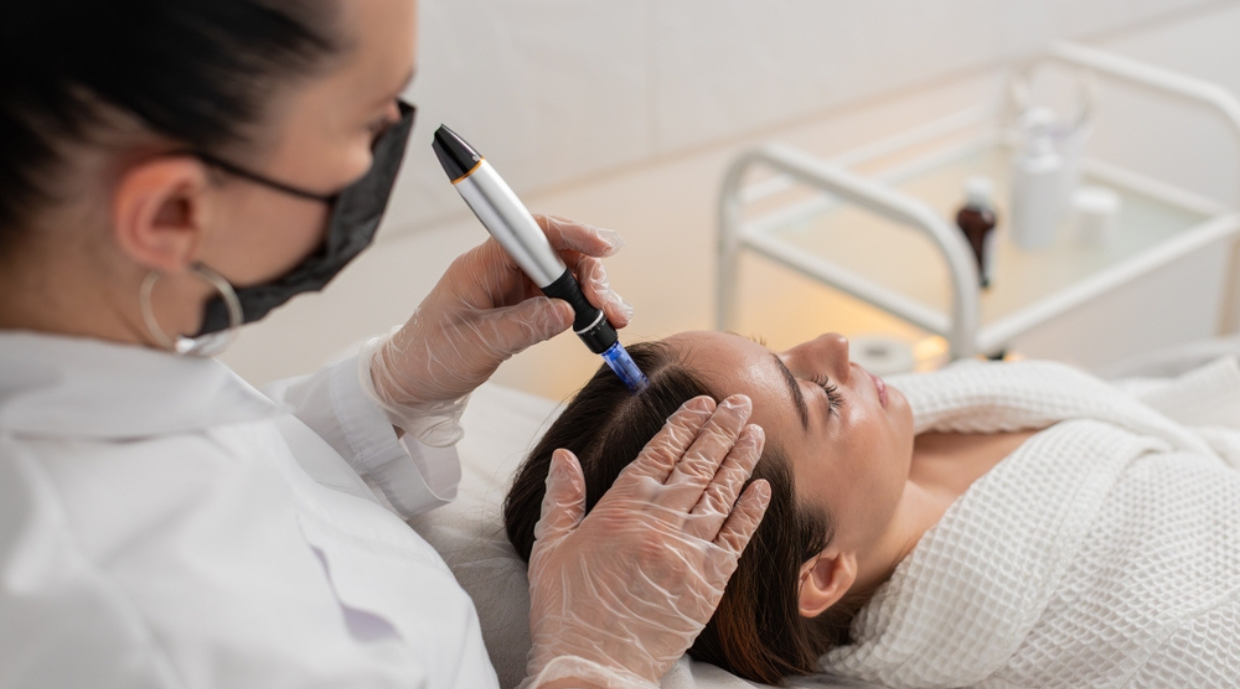
A standard microneedling treatment uses very fine needles to create controlled micro-injuries in the skin.
These tiny injuries trigger the skin’s repair response and encourage collagen production. Over time, this may make stretch marks look smoother and less obvious.
Microneedling differs from MNRF because standard microneedling does not deliver radiofrequency energy.
Recent reviews suggest microneedling can produce improvements comparable with some laser treatments. It may also have a lower risk of post-inflammatory pigmentation than fractional CO2 laser in some studies.
Several sessions are usually needed because collagen remodelling develops gradually.
5. Laser vs MNRF vs Microneedling: Which Is Better?
There is no universal winner.
If colour is the main concern, a particular laser may be considered. If older stretch marks have more visible texture, fractional laser, MNRF or microneedling may be discussed.
Skin tone also matters. People who easily develop dark marks after irritation may need a more cautious approach to aggressive laser procedures.
Current evidence does not show that one procedure always delivers the best stretch mark removal results.
Recent reviews also suggest that combination treatments may help with more resistant marks.
Treatment should therefore be chosen based on the stretch marks themselves, not simply because one procedure is more popular.
6. What Results Should You Realistically Expect?
Think in terms of improvement, not complete removal.
Treatment may make stretch marks less visible, soften their edges, improve texture or reduce colour differences. Mature marks may take longer to respond than newer marks.
You may need several sessions, with time between appointments for healing and collagen remodelling.
Results also vary from person to person. The age of the marks, skin type, body area and treatment method all influence the outcome.
No responsible clinic should promise that every stretch mark will disappear.
After treatment, follow aftercare carefully. Avoid picking at healing skin and protect treated areas from unnecessary sun exposure.
Conclusion
Stretch marks cannot currently be removed completely, but they can often be made less noticeable.
Laser, MNRF and microneedling treatment work in different ways, and each has potential advantages depending on the colour, age and texture of the marks.
Newer stretch marks may respond more easily, while older white marks can require a longer or combined treatment plan.
A skin assessment can give you a more realistic idea of the number of sessions, expected improvement and recovery involved.
Frequently Asked Questions
1. Can stretch marks go away completely after treatment?
No. Stretch marks are a form of scar. Treatments can make them less noticeable, but complete removal cannot be guaranteed.
2. How many microneedling sessions are needed for stretch marks?
The number varies. Many treatment plans involve several sessions spaced weeks apart so the skin has time to heal and produce new collagen.
3. Which is better for stretch marks: laser or microneedling?
Both can improve stretch marks. The better choice depends on the age and colour of the marks, skin type and risk of pigmentation. Research has found broadly comparable improvement between some laser and microneedling treatments.
4. Does microneedling work on old white stretch marks?
It may improve mature white stretch marks by stimulating collagen, but older marks can be harder to treat and may require multiple sessions or combined procedures.
5. Is MNRF painful for stretch mark removal?
Some discomfort, heat or pinching may be felt during MNRF. Numbing cream is often used, and temporary redness or tenderness can occur afterwards.


