
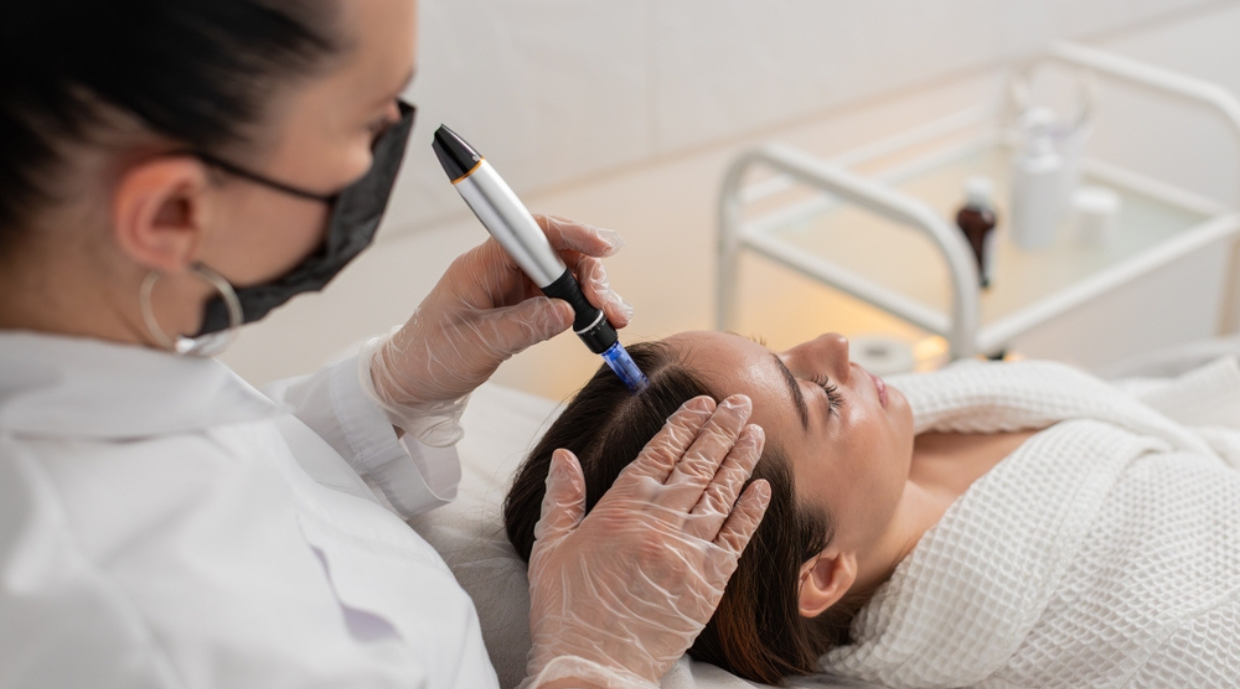
When people hear about full body lightening, expectations can vary widely. Some want to reduce years of tanning. Others are concerned about dark elbows, knees, underarms or uneven pigmentation across different areas.
The important thing to understand is that a Full Body Lightening Treatment is not designed to completely change the natural colour of your skin.
A realistic treatment plan focuses on concerns such as tanning, dark patches, post-inflammatory pigmentation and uneven tone.
Knowing what can actually improve—and what treatment cannot safely change—helps you make a better decision before starting.
1. What Does Full Body Lightening Really Mean?
Full body lightening is better understood as pigmentation correction rather than changing your original complexion.
Your natural skin colour is largely determined by genetics and the amount and activity of melanin in your skin.
However, different areas may become darker than your normal tone because of sun exposure, irritation, friction, acne, shaving or inflammation.
Treatment can target some of this additional pigmentation.
For example, someone whose arms have become tanned after years of sun exposure may see improvement when the tan and uneven pigmentation are addressed.
The goal should be to bring the skin closer to its natural, even-looking tone—not to promise a completely different complexion.
2. What Can Full Body Lightening Treatment Improve?
A properly planned Full Body Lightening Treatment may help several pigmentation concerns.
Sun tanning: Areas such as the arms, hands, neck, feet and legs can become darker after repeated UV exposure.
Uneven skin tone: Some body areas may appear noticeably darker than surrounding skin.
Post-acne marks: Acne on the shoulders, chest or back can leave dark spots after the active breakout settles.
Post-inflammatory pigmentation: Cuts, insect bites, rashes, folliculitis and other irritation can leave brown marks.
Dark elbows and knees: Friction, dryness and thicker skin can contribute to darker-looking areas.
Underarm pigmentation: Shaving, rubbing and product irritation may make the underarms appear darker.
Post-inflammatory hyperpigmentation is particularly common and can last longer in darker skin tones.
Improvement depends on identifying and controlling the original cause.
3. What Can’t Full Body Lightening Change?
This is where expectations need to stay realistic.
No responsible treatment should promise to permanently turn your natural complexion several shades lighter.
Treatment also cannot guarantee identical colour across every part of your body.
Areas such as the elbows, knees, knuckles and certain body folds naturally have different skin thickness, friction and pigmentation. Some difference in colour can be normal.
Another limitation is deeper pigmentation.
Pigment near the surface of the skin is generally easier to improve than pigmentation located deeper in the skin. The American Academy of Dermatology notes that superficial dark marks may take around 6–12 months to fade once their cause is controlled, while deeper pigmentation can take much longer.
So, dramatic overnight transformation should be treated as a warning sign rather than a realistic promise.
4. Which Treatments May Be Used?
There is no single “full body whitening procedure” suitable for everyone.
Treatment depends on where the pigmentation is located and what caused it.
Dermatologists may recommend topical ingredients such as azelaic acid, glycolic acid, vitamin C, kojic acid or retinoids for selected pigmentation concerns.
Superficial chemical peels may help with surface pigmentation and tanning.
Laser-based treatments may also be considered for certain resistant pigmentation problems.
However, stronger treatment does not automatically produce better results.
Chemical peels, lasers and IPL can sometimes worsen pigmentation if they cause excessive skin irritation, especially in people who are prone to post-inflammatory darkening.
A Full Body Lightening Treatment in Bangalore should therefore be customised according to skin tone, pigmentation depth and body area.
5. Why Do Some Areas Respond Faster Than Others?
Think about how differently various parts of your body behave.
Your forearms are regularly exposed to sunlight.
Your underarms experience friction and shaving.
Your knees and elbows have thicker skin and frequent pressure.
Your back may develop acne or folliculitis.
Because the causes are different, the speed of improvement will also differ.
A superficial tan on the arms may respond relatively quickly when sun exposure is controlled.
Older pigmentation on the knees or pigmentation caused by repeated friction may take longer.
Similarly, if acne continues appearing on the back, treating only the existing dark marks will not solve the problem. The acne needs to be controlled first.
This is why full body treatment should not mean applying exactly the same procedure everywhere.
6. What Makes Results Last Longer?
Maintaining results depends heavily on preventing the pigmentation from returning.
Sun protection is one of the most important steps for exposed skin.
Dermatologists recommend broad-spectrum SPF 30 or higher to help prevent new dark spots and reduce worsening of existing pigmentation.
Other helpful habits include:
- Reducing unnecessary friction
- Avoiding harsh body scrubs
- Managing acne and folliculitis
- Moisturising dry areas
- Avoiding products that repeatedly sting or burn
- Following prescribed pigmentation skincare
- Completing recommended maintenance treatment
Be cautious with unregulated lightening creams as well. Some products may contain undeclared steroids or mercury and can damage the skin with prolonged use.
Healthy skin should always take priority over chasing faster colour change.
Conclusion
A Full Body Lightening Treatment can help reduce tanning, dark spots, post-inflammatory pigmentation and uneven-looking skin tone.
What it cannot safely promise is a permanent change to your genetically determined natural complexion.
Different areas also respond differently. Arms affected by sun exposure may improve differently from dark knees, underarms or post-acne pigmentation on the back.
If you are considering Full Body Lightening Treatment in Bangalore, the best starting point is identifying why your skin has become darker and choosing treatment accordingly.
Realistic treatment should aim for clearer, healthier and more even-looking skin—not an artificial promise of becoming a completely different shade.
Frequently Asked Questions
1. Can full body lightening make my skin permanently fairer?
No. Treatment can reduce unwanted pigmentation, tanning and uneven tone, but it should not promise to permanently change your natural genetically determined skin colour.
2. How many sessions are needed for full body lightening treatment?
There is no fixed number. Session requirements depend on the type and depth of pigmentation, body area, treatment used and how your skin responds.
3. Which areas can be treated with full body lightening?
Common areas include the arms, neck, back, legs, elbows, knees and underarms. Each area may require a different treatment approach.
4. Is full body lightening treatment safe for Indian skin?
It can be when treatment strength and method are selected carefully. Indian and other medium-to-deeper skin tones can develop additional pigmentation after excessive irritation, so aggressive treatment should be avoided.
5. Can pigmentation return after full body lightening treatment?
Yes. Sun exposure, friction, shaving, acne, inflammation and other triggers can cause pigmentation to return. Sun protection, skincare and controlling the original cause can help maintain improvement.


