
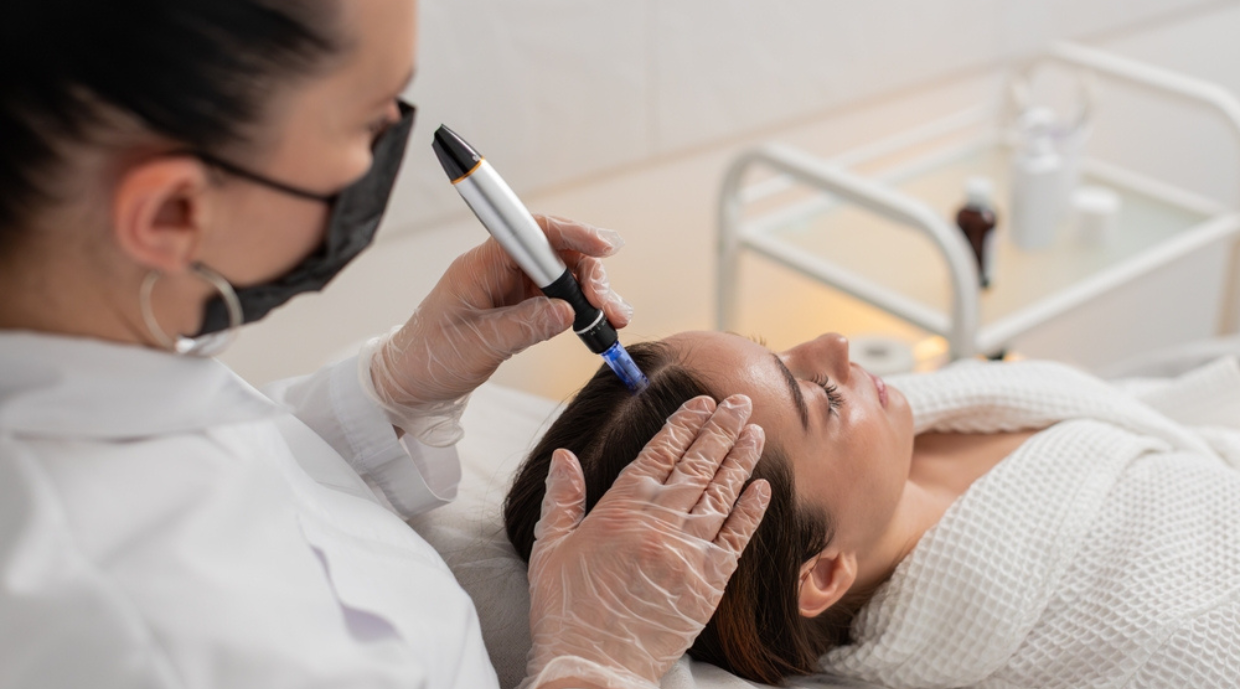
Aftercare is an important part of a GFC hair treatment session. The scalp has undergone multiple small injections, so temporary tenderness, redness, or sensitivity may occur while the treated areas settle.
If you are undergoing GFC hair treatment in Bangalore, knowing how to care for your scalp afterward can help reduce unnecessary irritation and make the recovery period easier. Hair washing, exercise, styling products, heat exposure, and your existing hair-care routine may all need temporary adjustments.
The exact instructions can vary depending on your scalp condition and treatment protocol. Follow the advice provided for your individual session rather than copying another person’s routine.
What Should You Expect Immediately After GFC Treatment?
Your scalp may feel slightly tender, tight, or sensitive immediately after treatment. Some people also notice temporary redness or small raised areas around the injection points.
These changes are associated with the procedure itself and do not mean that hair growth has already started.
During the early recovery period, avoid repeatedly touching, pressing, scratching, or massaging the treated areas unless your clinician specifically asks you to do so.
The aim is to allow the scalp to settle without unnecessary irritation.
If you develop significant swelling, worsening pain, discharge, fever, or symptoms that do not settle as expected, contact the treating clinic for further guidance.
When Can You Wash Your Hair After GFC?
Hair washing is one of the most common concerns after GFC treatment.
There is no single waiting period suitable for every patient. The timing may depend on the treatment technique, condition of the scalp, and instructions provided after the procedure.
Once you are advised that washing is appropriate, handle your scalp gently. Avoid vigorous rubbing, scratching, or applying unnecessary pressure over the treatment areas.
Lukewarm water may feel more comfortable than very hot water if the scalp remains sensitive.
If you already have dandruff, irritation, or another scalp concern, the products you use may also need to suit that condition. Understanding the causes of hair loss and available treatments is important because aftercare alone does not address the reason behind ongoing shedding.
Should You Apply Hair Oil, Serum, or Styling Products?
It is generally sensible to avoid unnecessary scalp products immediately after a GFC session.
Hair oils, serums, sprays, gels, dry shampoo, or unfamiliar products may irritate recently treated skin. Even products you normally tolerate may feel different when the scalp has several fresh injection sites.
Once your normal routine can be resumed, products should be selected according to your scalp and hair condition rather than simply because you have undergone GFC.
Chemical procedures also need consideration. Hair colouring, bleaching, straightening, smoothing, or perming may need to be scheduled away from your GFC sessions.
Instead of following a fixed timeline found online, ask when your usual hair-care and styling routine may safely be restarted.
Can You Exercise After a GFC Session?
Strenuous exercise may temporarily need to be limited after treatment.
Intense workouts increase body temperature and sweating. Both may make a recently treated scalp feel more irritated or uncomfortable.
Activities that may need a short break include:
- High-intensity cardio
- Heavy weight training
- Hot yoga
- Competitive sports
- Activities causing heavy sweating
Light everyday activity may be easier to resume sooner.
GFC does not involve surgical incisions, so prolonged downtime is generally not expected. However, minimal downtime does not mean aftercare can be ignored.
Different hair loss treatment options may have different preparation and recovery requirements, so follow instructions for the procedure you actually received.
Can You Comb and Style Your Hair Normally?
Hair should be handled gently during the early recovery period.
Avoid aggressive brushing, pulling at the roots, scratching the scalp, or repeatedly running a comb over sensitive injection areas.
Tight hairstyles may also place unnecessary tension on hair that is already thinning. If you regularly wear tight ponytails, braids, extensions, or similar hairstyles, ask when they can be resumed.
Heat styling may also need to be limited temporarily.
If the scalp remains sensitive, avoid directing excessive heat from a hair dryer or styling device onto recently treated areas. Your normal styling routine can generally be reintroduced once the scalp has recovered and you have been advised that it is appropriate.
Should You Avoid Swimming, Saunas, and Excessive Heat?
Swimming pools, steam rooms, saunas, and prolonged heat exposure may be temporarily restricted following GFC.
The treated scalp may be more sensitive to sweat, heat, chlorine, and other potential irritants during the early recovery period.
Your clinician should advise when these activities may be resumed.
The same applies to prolonged sun exposure. If the scalp is visible because of thinning hair, ask what type of protection is appropriate during recovery rather than immediately applying unfamiliar products.
Patients undergoing GFC and PRP treatment should also avoid assuming that both procedures always have identical aftercare requirements. Follow the instructions given for the treatment you actually received.
Can You Continue Hair-Loss Medicines After GFC?
Do not stop, start, or change prescribed medication independently because you have undergone GFC.
Some patients may already be using topical or oral hair-loss treatments as part of a wider management plan. Whether these should be continued immediately after treatment depends on the medicine, scalp condition, and treatment strategy.
The same rule applies to supplements.
Do not introduce new supplements, medications, or topical products purely because you want faster hair growth after GFC.
For selected patients, PRP treatment for hair loss may also be discussed as another non-surgical option. The choice of treatment should be based on diagnosis and suitability rather than adding multiple procedures without assessment.
How Should You Monitor GFC Results?
Avoid checking for visible results every day.
Hair can look different depending on lighting, styling, oiliness, hair length, and how it is parted. Small day-to-day changes may therefore be misleading.
Standardized photographs taken under similar conditions are more useful for tracking progress over time.
Follow-up appointments may also assess:
- Hair shedding
- Scalp condition
- Changes in density
- Hair-shaft quality
- Progression of thinning
- Response to the treatment plan
Hair grows through natural biological cycles, so meaningful results cannot usually be judged within a few days of treatment.
Additional sessions should not automatically be added simply because you have not noticed visible improvement immediately.
What Should You Avoid After GFC Hair Treatment?
The general principle is to avoid anything likely to irritate the treated scalp.
During the early recovery period, avoid:
- Aggressively scratching the scalp
- Strong scalp massage
- Applying unfamiliar products
- Excessive heat
- Heavy sweating if temporarily restricted
- Chemical hair procedures before clearance
- Self-prescribing medication specifically for the procedure
If you already take medication for another condition, do not stop it without medical advice.
The aftercare plan should reflect your own scalp condition, medical history, medications, and treatment technique rather than a generic checklist.
How Long Does Recovery Usually Take?
GFC is a non-surgical procedure, so extensive recovery is generally not expected.
Temporary redness or tenderness may settle relatively quickly, but the exact experience varies between patients.
The point at which you return to normal hair washing, workouts, swimming, chemical treatments, and styling may differ depending on how the scalp responds.
Recovery should therefore be judged by both the treatment instructions and how the scalp is healing rather than by an arbitrary number of hours or days.
Does Good Aftercare Make GFC Work Better?
Following aftercare instructions helps protect the treated scalp and avoid unnecessary irritation, but it does not guarantee a specific hair-growth result.
GFC outcomes may also depend on:
- Cause of hair loss
- Stage of thinning
- Follicle activity
- Scalp health
- Treatment consistency
- Medical or nutritional factors
- Individual biological response
Good aftercare is therefore one part of the treatment process rather than a guarantee of regrowth.
If hair loss continues to worsen despite treatment, the underlying diagnosis may need to be reconsidered.
When Should You Contact the Clinic?
Mild tenderness or temporary redness may occur after scalp injections.
However, contact the treating clinic if you experience symptoms such as:
- Increasing or severe pain
- Significant swelling
- Persistent discharge
- Fever
- Worsening redness
- An unexpected reaction
- Symptoms that do not settle as advised
Unexpected symptoms should be assessed rather than managed solely through online advice.
Conclusion
GFC hair treatment aftercare is generally straightforward. Treat the scalp gently, follow instructions regarding hair washing and exercise, avoid unnecessary irritation, and be cautious with styling products, chemical treatments, excessive heat, and heavy sweating.
The original draft also correctly emphasizes that aftercare should be individualized according to scalp health, medication use, and the specific procedure rather than copied from another patient. Pasted markdown
If you are receiving GFC hair treatment in Bangalore, ask for clear aftercare instructions before leaving your appointment. Knowing when to wash your hair, exercise, resume styling, and return to your normal routine can make the recovery period easier to manage.
Frequently Asked Questions
1. Can I wash my hair on the same day as GFC treatment?
The recommended timing varies according to the treatment protocol. Follow the specific hair-washing instructions provided after your session.
2. Can I apply hair oil after GFC?
Avoid applying unnecessary oils directly to recently treated areas until you are advised that your normal scalp-care routine can be resumed.
3. Can I exercise after GFC hair treatment?
Strenuous exercise and heavy sweating may temporarily be restricted. Ask when your normal workout routine can safely be resumed.
4. Is redness normal after GFC treatment?
Temporary redness or mild tenderness may occur after scalp injections. Contact the clinic if symptoms become severe, worsen, or are accompanied by other concerning signs.
5. Do I need a special shampoo after GFC?
Not everyone needs a special shampoo. Use products suited to your scalp condition and follow any specific recommendations provided for your treatment.


