
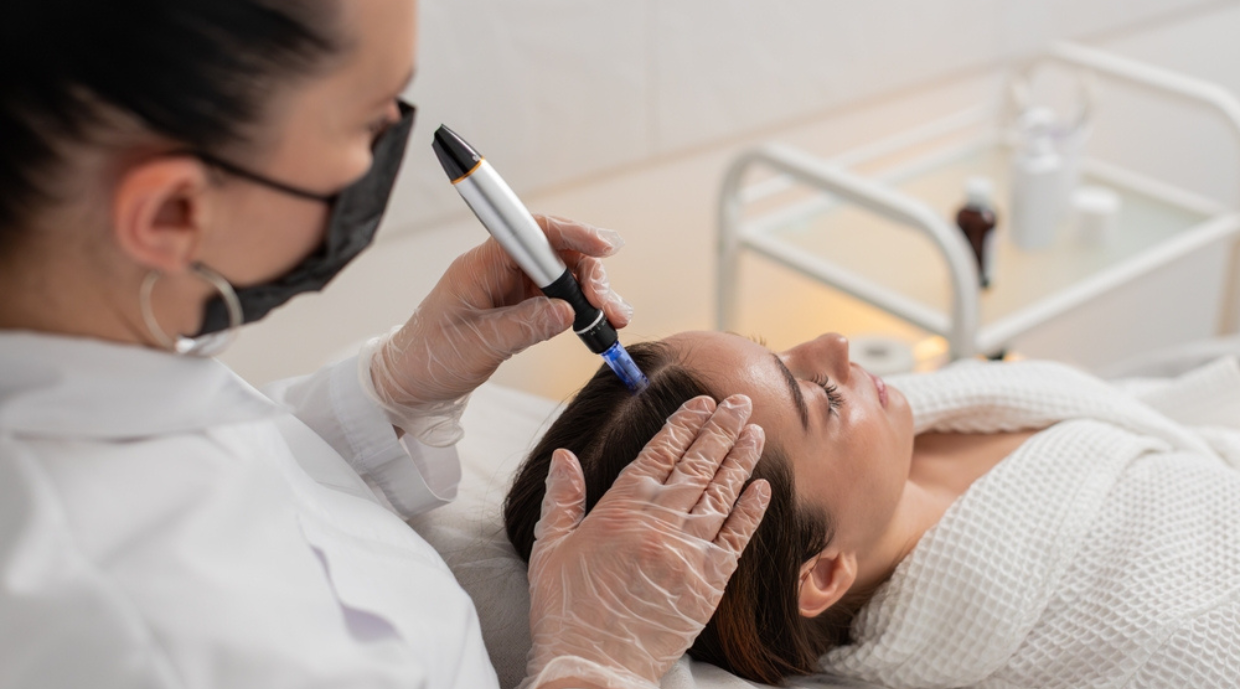
PRP is often considered by people who notice increased shedding, a widening part, a receding hairline, or gradual loss of hair density. However, experiencing hair loss does not automatically mean PRP is the right treatment.
If you are considering PRP treatment in Bangalore, suitability depends on the type and stage of hair loss, condition of existing follicles, scalp health, medical history, and realistic treatment goals. A proper diagnosis should therefore come before deciding to undergo a series of PRP sessions.
What Is PRP Hair Treatment?
PRP stands for platelet-rich plasma. During treatment, a small sample of the patient’s own blood is collected and processed to separate plasma containing a higher concentration of platelets.
The prepared PRP is then introduced into selected areas of the scalp.
PRP has mainly been studied for androgenetic alopecia, commonly known as male or female pattern hair loss. Research has reported potential improvements in measures such as hair density in selected patients, but treatment protocols and individual responses vary.
This means PRP may have a role in hair-loss management, but it should not be considered a guaranteed solution for every form of thinning.
Understanding the causes of hair loss is therefore an important first step before deciding whether PRP is relevant.
Who May Be Considered for PRP Hair Treatment?
PRP may be considered for adults with certain forms of hair thinning when active follicles remain in the affected areas.
People with early or moderate pattern hair loss are among those who may be assessed for treatment. In androgenetic alopecia, follicles gradually become smaller and begin producing finer hair strands.
At this stage, a person may notice reduced density even though follicles are still present.
Possible signs include:
- Gradually widening hair part
- Reduced density around the crown
- Increasing scalp visibility
- Progressive temple recession
- Reduced overall hair volume
- Finer hair strands
- Gradual rather than sudden thinning
Someone experiencing progressive thinning may therefore be more appropriate for assessment than a person with long-standing areas of complete follicular loss.
The available PRP hair treatment options should be discussed after the cause and pattern of hair loss have been evaluated.
Does PRP Suit Early Hair Thinning?
Early assessment may be useful because more active follicles may remain before hair loss becomes advanced.
This does not mean everyone who notices early thinning automatically needs PRP.
The important question is why the hair is becoming thinner.
Someone with early androgenetic alopecia may require a different treatment approach from someone experiencing temporary shedding after illness, stress, weight changes, or nutritional deficiency.
Finding hair loss early gives the clinician an opportunity to assess follicle activity and identify the underlying cause before further progression occurs.
PRP may then be considered if the diagnosis and condition of the follicles support its use.
Why Does the Cause of Hair Loss Matter?
Hair loss is a symptom rather than one single condition.
Possible causes include genetics, hormonal changes, nutritional deficiencies, significant stress, illness, medications, scalp disorders, and other medical factors.
Two people may therefore have similar-looking thinning but completely different underlying causes.
For example, gradual follicular miniaturization associated with pattern hair loss is different from sudden shedding triggered by illness or nutritional deficiency.
If an underlying medical or nutritional factor is contributing to hair loss, addressing that issue may be more important than immediately starting an injectable procedure.
Reviewing broader hair loss treatment options helps place PRP within an overall management plan rather than treating it as the default option for every type of shedding.
Does the Stage of Hair Loss Affect PRP Suitability?
Yes.
PRP works with follicles already present in the scalp. It should not be expected to create entirely new follicles where permanent follicular loss has already occurred.
Someone with early follicular miniaturization may therefore have different treatment potential from someone who has had a smooth bald area for many years.
This distinction is important when setting realistic expectations.
Advanced hair loss does not mean there are no available treatment options. It simply means PRP may not be the most suitable choice for every affected area.
A clinician may discuss medical, non-surgical, or surgical approaches depending on the diagnosis and how much viable hair remains.
Who May Need Further Assessment Before PRP?
Medical history is an important part of PRP suitability because the procedure involves blood collection and multiple scalp injections.
Further assessment may be required for people with certain blood or platelet disorders, significant anemia, active infections, or other medical conditions that could affect treatment.
Medicines and supplements also matter.
If you use medication that affects bleeding, clotting, or healing, disclose it during the consultation.
Do not stop prescribed medication independently in preparation for PRP. Any medication change should be discussed with the clinician responsible for your care.
The scalp should also be examined. Active infection, significant inflammation, or another scalp disorder may need treatment before PRP is considered.
What If Your Hair Loss Is Sudden or Patchy?
Sudden or patchy hair loss should not automatically be treated as pattern thinning.
Further assessment may be important when hair loss:
- Starts rapidly
- Occurs in clearly defined patches
- Is accompanied by scalp pain
- Causes persistent itching
- Develops with redness
- Is associated with significant scaling
- Appears alongside other health changes
Some forms of shedding may improve after the underlying trigger is addressed. Other hair or scalp conditions may require specific treatment.
PRP should not delay diagnosis of another problem.
Understanding why the hair loss is occurring is more important than immediately choosing an injectable procedure.
Does Previous Hair-Loss Treatment Affect Eligibility?
Having previously used another hair-loss treatment does not automatically make someone suitable or unsuitable for PRP.
The clinician may ask about topical treatments, oral medicines, supplements, previous procedures, and how your hair responded.
This history provides useful information about progression and whether earlier treatment produced any meaningful change.
For patients comparing injectable options, GFC and PRP treatments may both be part of the discussion.
Neither treatment should be selected simply because it is newer, more popular, or worked for someone else.
Treatment choice should be based on diagnosis, previous response, follicle condition, and individual goals.
How Is PRP Suitability Assessed?
Assessment generally begins with the history of your hair loss.
The clinician may ask when thinning began, whether it developed gradually or suddenly, whether there is a family history of similar hair loss, and whether you have experienced recent illness, stress, weight changes, or medication changes.
The scalp and hair may then be examined for density, thinning pattern, follicular miniaturization, areas of complete hair loss, inflammation, scaling, and other changes.
If nutritional, hormonal, autoimmune, or medical factors are suspected, further investigation may be considered.
Only after the assessment should the number of sessions, treatment intervals, expected limitations, and follow-up plan be discussed.
What Results Should a Suitable Candidate Expect?
Being suitable for PRP does not guarantee a particular amount of regrowth.
Some patients may first notice changes in shedding. Improvements in thickness or density, when they occur, generally take longer because hair follows a natural growth cycle.
Results may depend on:
- Diagnosis
- Stage of thinning
- Remaining follicle activity
- Scalp health
- Treatment schedule
- General health
- Other treatments
- Individual biological response
Progress should therefore be compared with the patient’s own baseline rather than another person’s before-and-after photographs.
PRP should not be expected to restore an entire head of hair, reverse every cause of hair loss, or provide identical results for everyone.
Who May Be Less Suitable for PRP?
PRP may have more limited potential when follicular loss is extensive and long-standing.
It may also not be the first treatment considered when hair loss is primarily associated with an untreated medical condition, significant nutritional deficiency, active scalp disease, or another condition requiring specific management.
Someone experiencing sudden unexplained shedding may require further investigation before PRP is considered.
The key question is not simply how much hair has been lost. It is whether the diagnosis, follicle condition, and overall health support the use of PRP.
Conclusion
A suitable candidate for PRP hair treatment is determined by diagnosis rather than simply the presence of hair fall.
People with early or moderate pattern thinning and active follicles may be considered, while sudden shedding, advanced follicular loss, scalp disease, or certain medical factors may require a different approach. These are also the main eligibility considerations identified in the original draft. Pasted markdown
If you are considering PRP treatment in Bangalore, begin with a professional hair and scalp assessment. It can help establish the cause of hair loss, determine whether PRP fits your condition, and set realistic expectations before treatment begins.
Frequently Asked Questions
1. Is PRP suitable for everyone experiencing hair loss?
No. Hair loss has many possible causes, and PRP is not appropriate for every condition. Identifying the underlying cause should come before treatment.
2. Can PRP help with a receding hairline?
PRP may be considered when active follicles remain in the thinning area. Suitability depends on how advanced the recession is and the underlying diagnosis.
3. Is PRP better for early-stage hair loss?
Early pattern thinning may present a different treatment opportunity because more active follicles may remain. However, early hair loss still needs to be properly diagnosed before PRP is recommended.
4. Can I undergo PRP if I take regular medication?
Possibly, but all medicines and supplements should be disclosed during consultation. Some may affect bleeding, healing, or treatment planning. Do not stop prescribed medication without medical advice.
5. Do I need blood tests before PRP hair treatment?
Not everyone needs the same investigations. Additional tests may be considered when the history or examination suggests nutritional deficiencies, hormonal issues, anemia, or another medical contributor to hair loss.


