
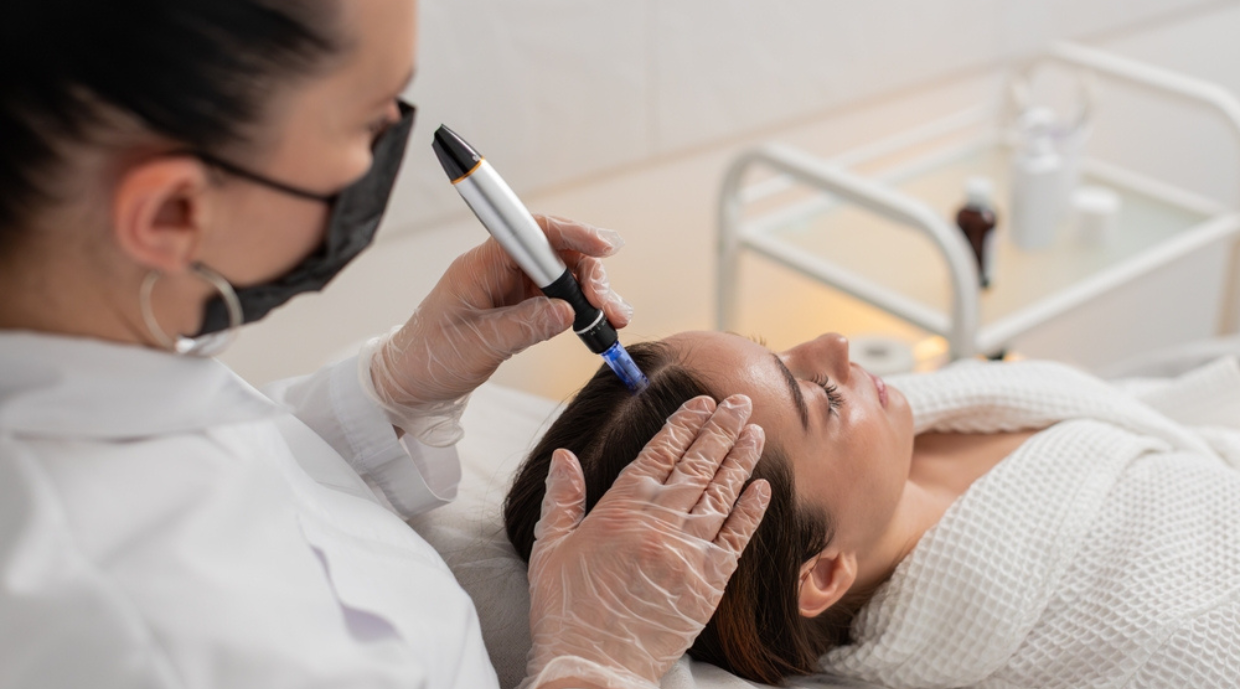
What you do after a PRP session matters because the scalp has undergone multiple small injections. Temporary tenderness, redness, or sensitivity may occur while the treated areas settle.
If you are undergoing PRP treatment in Bangalore, your aftercare instructions should reflect your scalp condition, treatment technique, existing medicines, and overall hair-loss plan. General care usually focuses on protecting the scalp from unnecessary irritation and knowing when normal activities can be resumed.
Hair washing, exercise, styling products, heat exposure, and regular hair treatments may all need temporary adjustments.
What Should You Expect Immediately After PRP Hair Treatment?
PRP stands for platelet-rich plasma. The procedure involves collecting a small sample of your own blood, processing it to prepare the platelet-rich portion, and introducing it into selected areas of the scalp.
Because several small injections are used, you may notice temporary:
- Scalp tenderness
- Mild redness
- Sensitivity
- Small raised areas around injection sites
- Mild discomfort when touching the scalp
These effects relate to the procedure itself and should not be interpreted as an immediate sign of hair growth.
During the early recovery period, avoid repeatedly touching, rubbing, scratching, or pressing the treated areas.
If pain becomes severe, swelling increases, or you develop discharge, fever, or another unexpected symptom, contact the treating clinic for guidance.
When Can You Wash Your Hair After PRP?
Hair washing is one of the most common questions after a PRP session.
There is no single waiting period suitable for every patient. The recommended timing may depend on the treatment protocol and how sensitive your scalp feels afterward.
When you are advised to resume washing, handle the scalp gently. Avoid aggressive rubbing with your fingertips or nails, particularly around tender injection areas.
Lukewarm water may feel more comfortable than very hot water while the scalp remains sensitive.
Your regular shampoo may also need to suit your scalp condition. Someone with dandruff, itching, inflammation, or another scalp concern may require different products from a person without those problems.
Understanding the causes of hair loss remains important because post-treatment care cannot address the underlying reason for persistent shedding.
Can You Exercise After PRP Hair Treatment?
Strenuous exercise may temporarily need to be limited after a PRP session.
Heavy workouts increase body temperature and sweating. This may make recently treated areas feel more irritated or uncomfortable.
Activities that may need to be paused briefly include:
- High-intensity cardio
- Heavy weight training
- Competitive sports
- Hot yoga
- Workouts that cause significant sweating
Light everyday activity may be easier to resume sooner depending on how you feel and the instructions provided.
PRP does not involve surgical incisions, so prolonged downtime is generally not expected. However, limited downtime should not be confused with having no recovery precautions.
Following the instructions given after your PRP hair treatment is more appropriate than following another patient’s recovery routine.
Should You Avoid Hair Oil and Styling Products?
It is usually sensible to avoid unnecessary products directly on recently treated areas until you are advised that your regular routine can be resumed.
Hair oils, serums, sprays, gels, dry shampoo, or styling products may irritate sensitive injection sites.
Even products you normally tolerate may feel uncomfortable shortly after the procedure.
Once your usual routine is resumed, choose products according to your hair and scalp condition rather than assuming PRP requires a special oil, serum, or shampoo.
Chemical hair services also require planning.
Hair colouring, bleaching, straightening, smoothing, perming, or similar treatments may need to be scheduled away from your PRP appointments.
Ask when these services can safely be resumed based on how your scalp has recovered.
Can You Comb and Style Your Hair Normally?
Gentle handling is advisable immediately after PRP.
Avoid pulling on the hair, aggressively brushing over sensitive areas, or repeatedly passing a comb across tender injection sites.
Tight hairstyles may also create unnecessary tension on both the scalp and existing hair.
Examples include tight ponytails, braids, extensions, or hairstyles that repeatedly pull from the roots.
Heat styling should also be approached carefully while tenderness remains. Avoid directing excessive heat from a hair dryer or styling device onto recently treated areas.
Once sensitivity settles and you are advised that your normal routine may resume, you can gradually return to regular styling.
People experiencing ongoing thinning may also benefit from reviewing broader hair loss treatment options rather than focusing only on post-procedure grooming.
Should You Avoid Swimming, Saunas and Excessive Heat?
Swimming pools, steam rooms, saunas, and activities involving prolonged heat may be restricted temporarily.
A recently treated scalp may be more sensitive to heat, sweating, pool water, or other potential irritants.
Instead of following a fixed waiting period found online, follow the recovery advice provided after your treatment.
The same principle applies to prolonged direct sun exposure.
If thinning leaves areas of your scalp exposed, ask what form of protection is suitable during recovery rather than immediately applying unfamiliar products to treated skin.
Can You Continue Hair-Loss Medicines After PRP?
Do not stop, restart, or change prescribed hair-loss medication independently because you have undergone PRP.
Some patients may already use topical or oral treatments as part of a broader hair-loss management plan. Whether these should be continued immediately after a PRP session depends on the medication, scalp condition, and treatment plan.
The same applies to supplements.
Avoid adding new products, medicines, or supplements simply because you want quicker hair-growth results.
For selected patients, GFC and PRP treatments may both be considered as part of non-surgical hair management. The choice should depend on diagnosis and suitability rather than combining procedures without a clear reason.
How Soon Can You Expect PRP Hair Results?
The recovery period after PRP is relatively short compared with the time needed to assess hair-growth results.
PRP does not produce immediate visible regrowth.
Hair follicles follow natural growth cycles, so meaningful changes generally need to be assessed over a longer period.
Some people may first notice changes in shedding. Improvements in hair thickness or density, when they occur, may become noticeable later.
The timeline can vary depending on:
- Cause of hair loss
- Stage of thinning
- Remaining follicle activity
- Scalp condition
- Treatment schedule
- Overall health
- Individual response
Daily mirror checks can be misleading because hair appearance changes depending on lighting, styling, oiliness, hair length, and how it is parted.
Consistent photographs and scheduled follow-up appointments provide a more useful comparison.
What Should You Avoid Doing After PRP?
The main principle is to avoid unnecessary irritation and avoid making unplanned changes to your treatment routine.
During the early recovery period, avoid:
- Aggressively scratching the scalp
- Strong scalp massage
- Heavy sweating if temporarily restricted
- Excessive heat
- Applying unfamiliar scalp products
- Chemical hair treatments before clearance
- Self-prescribing medication for the procedure
You should also avoid assuming that more PRP sessions will compensate for poor aftercare or produce faster hair growth.
PRP treatment is generally planned over time because follicles follow biological growth cycles. The number of sessions should be based on the treatment plan and response.
When Should You Contact the Clinic?
Temporary redness, tenderness, or sensitivity may occur after scalp injections.
However, symptoms that are severe, progressively worsening, or unusual should be reviewed.
Contact the treating clinic if you experience:
- Significant swelling
- Persistent or severe pain
- Discharge from injection sites
- Fever
- Increasing redness
- An unexpected reaction
- Symptoms that do not settle as advised
Do not rely solely on online advice to manage an unexpected reaction.
The clinician who performed the procedure is better placed to assess whether your symptoms are part of normal recovery or require additional attention.
Does Good Aftercare Guarantee Better PRP Results?
No.
Following aftercare instructions helps protect the scalp and reduce unnecessary irritation, but it does not guarantee a particular level of hair growth.
PRP results may also depend on the diagnosis, stage of thinning, follicle health, scalp condition, treatment consistency, overall health, and individual biological response.
Good aftercare should therefore be viewed as one part of the overall treatment process.
If hair loss continues to worsen despite treatment, the underlying condition may need to be reassessed rather than assuming the aftercare routine is the problem.
Conclusion
PRP hair treatment aftercare is generally straightforward. Handle the scalp gently, follow instructions regarding hair washing and exercise, avoid unnecessary irritation, and be cautious with styling products, chemical treatments, excessive heat, and heavy sweating.
The original draft also correctly emphasizes that recovery instructions may vary depending on scalp health, treatment technique, existing medicines, and the wider hair-loss plan. Pasted markdown
If you are undergoing PRP treatment in Bangalore, ask for clear aftercare guidance before leaving your appointment. Knowing when to wash your hair, exercise, resume styling, and return to your normal routine can make the recovery period easier to manage.
Frequently Asked Questions
1. Can I wash my hair immediately after PRP?
You may be advised to wait for a short period before washing your hair. Follow the specific instructions provided after your procedure.
2. Can I exercise after PRP hair treatment?
Strenuous exercise and heavy sweating may temporarily be restricted. Ask when your usual workout routine may safely be resumed.
3. Can I apply hair oil after PRP?
Avoid applying unnecessary products directly to recently treated areas until you are advised that your normal scalp-care routine can be restarted.
4. Can I go to work after PRP treatment?
Many people can return to normal daily activities relatively soon. Mild redness or tenderness may still be present for a short period.
5. Can I continue my regular hair-loss treatment after PRP?
It depends on the medication or product you use. Do not stop, restart, or change prescribed treatments without discussing them with the clinician managing your hair loss.


